
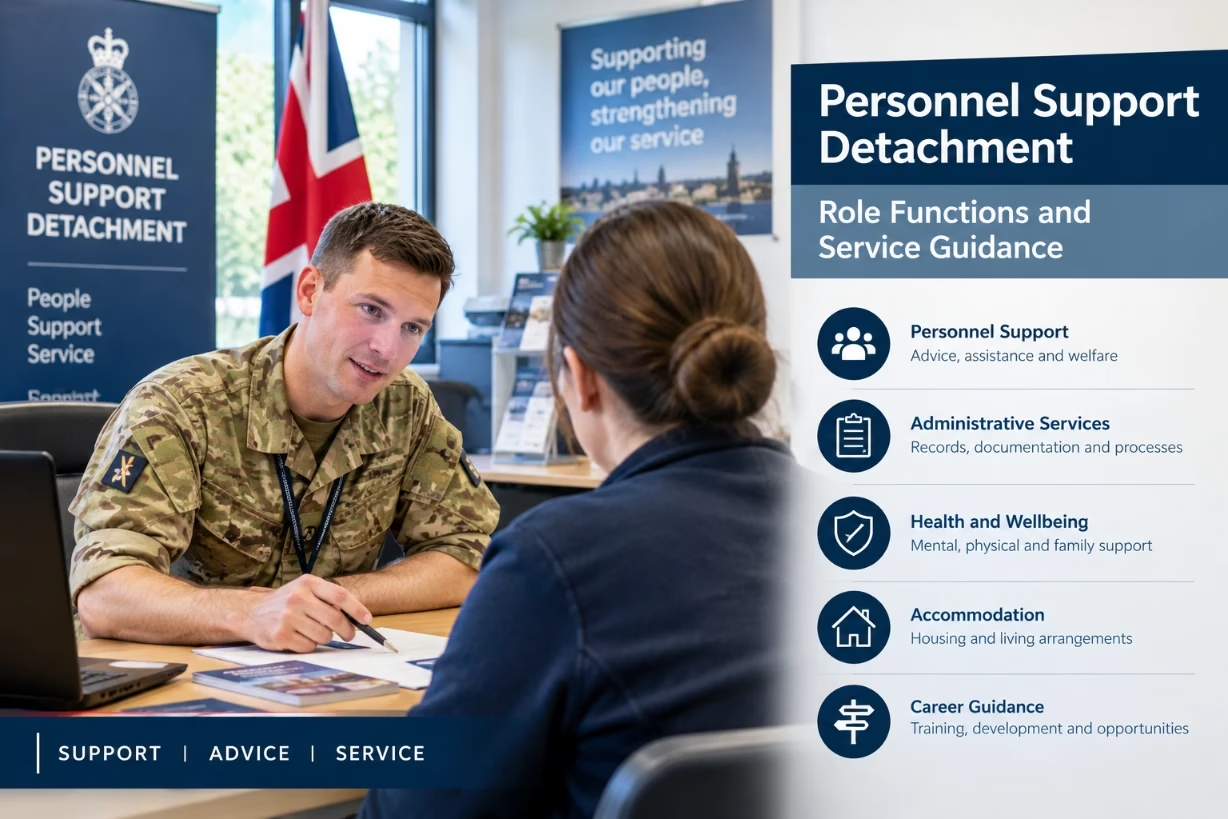
Personnel support detachment is the small team in the background that keeps pay, records, orders, and family support running so service members can focus on the mission without worrying that their admin life will fall apart.
What personnel support detachment really does for the force
When I talk about personnel support detachment, I am really talking about the human engine behind a unit’s readiness. On paper, it looks like a simple admin office. In real life, personnel support detachment is the crew that fixes pay when it breaks, corrects records at the worst possible time, and guides families through stress and change. If you serve, or support someone who serves, you feel their work even if you never see their name on a door.
I want to walk through what personnel support detachment actually does day to day, how you can use their services the smart way, and what to expect when you walk into their office or send that email asking for help.
Core role of a personnel support detachment
The first thing to know is that personnel support detachment exists to support people, not paperwork. The paperwork is just the trail. The real job is to keep a service member’s career and family life stable enough to stay focused on the mission. A strong personnel support detachment keeps three big areas steady: money, records, and orders.
Money: pay, allowances, and travel support
Most service members do not notice personnel support detachment until a paycheck looks wrong. That is usually when people show up angry, stressed, and worried about rent or food. A good detachment knows this and does not take it personal. Their job is to fix the issue and protect you from long term damage.
Personnel support detachment handles base pay and special pays, housing allowance changes, cost of living updates, and more. When you get married, divorced, move out of the barracks, gain a dependent, or move overseas, they are the ones telling the system to pay you what you rate. They also work with travel claims when you go on temporary duty or permanent change of station. If a trip involves orders, receipts, and miles traveled, personnel support detachment is involved somewhere.
Because money is such a sensitive subject, I always suggest that people keep a personal folder or digital drive with copies of orders, leave forms, marriage or birth certificates, and any email that confirms a change. When you walk into personnel support detachment with that kind of record, solving pay problems becomes faster and less painful for both sides.
Records: careers, awards, and service history
Next comes your record. The personnel support detachment manages the official story of your service. That includes your dates of service, promotions, awards, qualifications, training, fitness scores, security paperwork, and more. Promotion boards and assignment managers rely on that record to be right. One missing award or wrong date can shift a whole career.
Personnel support detachment updates your file when you finish a school, earn a new qualification, receive a medal, or complete a deployment. They file evaluations, performance reports, and sometimes fitness or medical admin notes. They also support corrections when something shows up wrong because of unit errors or system glitches.
I always tell people to check their record at least twice a year, and every time before a board or major move. You might trust the system, but the system is still made of humans. A quick visit or secure portal check, then a talk with personnel support detachment if something looks off, can save you from hard surprises at promotion time.
Orders: assignments, separations, and retirements
Personnel support detachment is also the guide for you when you are moving in, moving out, or moving on. When you first report to a new duty station, they help complete your check in, start your local entitlements, and link you with the right offices. When you leave, they handle checkout, stop certain pays, and prepare paperwork that follows you to the next command or into civilian life.
For separation or retirement, personnel support detachment becomes even more important. They generate final orders, check for service time accuracy, and coordinate final pay actions. They also often connect you with transition classes, benefits briefings, and veteran support resources. If you are within 12 to 18 months of leaving the service, build a relationship with personnel support detachment early. Ask them for a checklist, review your time in service and rank dates, and make sure your awards and deployments are all in the system.
Key functions of personnel support detachment you should use
Personnel support detachment is not only there for emergencies. It is a standing resource you can tap anytime you face a change or a question about your career, your pay, or your family situation. Let me break down several functions that most people underuse.
ID cards and DEERS / enrollment support
One of the most visible roles of personnel support detachment is running the ID and enrollment office. They keep the Defense Enrollment Eligibility Reporting System or similar databases updated, which affects health care, access to base, and benefits for your dependents.
Any time your family changes, such as marriage, birth, adoption, divorce, or a child aging out of coverage, personnel support detachment updates that status. They issue and renew ID cards for service members, spouses, children, and sometimes caregivers. If your ID card is about to expire, do not wait for the last week. Book an appointment early, bring original documents, and confirm in advance which items the personnel support detachment requires so you do not need a second trip.
Leave, passes, and absence records
Most people think of leave as something the chain of command handles, but personnel support detachment usually touches the back end. They manage leave balances, enter transactions, and correct mistakes in the system. When you take emergency leave, convalescent leave, or special types of absence, they make sure it is coded correctly.
If your leave balance looks wrong, or you suspect days did not post back after a canceled trip, ask your unit admin to print a leave and earning statement and then visit personnel support detachment. Clear the issue while memories and emails are fresh rather than waiting until the end of the year when you are close to losing days.
Casualty and family support coordination
The most sensitive work of personnel support detachment is in casualty and family support. They help track next of kin information, coordinate benefits if a service member is injured or dies, and guide families through paperwork that no one ever wants to fill out. When something tragic happens, the level of care and accuracy from personnel support detachment can shape a family’s view of the military for life.
As hard as it is to think about, make sure your emergency data is current. If you marry, divorce, have children, or lose a loved one, update your records with personnel support detachment. It is an act of care for the people who would have to pick up the pieces if the worst day ever comes.
How to work with personnel support detachment effectively
I have watched both sides of the counter. On one side is the stressed service member who thinks the whole system is against them. On the other side is the personnel support detachment staffer who has already dealt with ten angry people before lunch and is still trying to fix complex cases with rigid systems. When both sides slow down and respect each other, things get solved.
Prepare before you walk in or call
Preparation saves everyone time. Before you reach out to personnel support detachment, take a few steps:
- Write down what you need in one or two clear sentences.
- Gather orders, past LES, awards, certificates, or emails that prove your case.
- Know key dates such as when the issue started or when you moved.
- Bring your ID and any dependent documents like birth or marriage certificates.
When you show up ready, personnel support detachment can usually spot the problem faster and suggest the right form or process without making you come back three times.
Use respectful but firm communication
Stress makes people sharp and harsh, especially when money or family is on the line. I have seen service members walk into personnel support detachment ready to fight. That almost always delays things, even if the staff stays polite. Firm and calm works far better than loud and angry.
Try wording like this: “My last two paychecks were short and I think my housing allowance stopped after my move. Here are my PCS orders and my lease. Can you help me see what went wrong and who needs to fix it?” That shows you respect their role and that you did your homework. Most personnel support detachment teams respond well to that kind of approach.
Follow up and document everything
After any visit or call, write down who you spoke with, what they said they would do, and when they expected action. If they give you an email address or case number, save it. If you do not see progress by the time they suggested, follow up politely. This is not nagging. It is protecting your own career and finances, and it helps personnel support detachment track open cases in a busy work center.
Common problems personnel support detachment helps solve
You might not know when to call your chain of command and when to call personnel support detachment. Here are some everyday situations where they are the right stop, or at least an important part of the fix.
Pay issues after a PCS or deployment
Moves and deployments stress the pay system. Maybe your basic allowance for housing did not switch to the new rate. Maybe your family separation pay did not start or stop on time. Maybe your combat zone tax exclusion looks wrong. Personnel support detachment can look inside the system, see which dates or codes are off, and submit correction actions.
When you return from deployment or complete a PCS, it helps to set a calendar reminder to check your pay and housing allowance for at least the next two cycles. If anything looks odd, gather your orders and head to personnel support detachment early. Small mistakes can turn into big debts if they run unchecked for months.
Missing awards or qualifications in your record
Sometimes your unit gives you a certificate or medal and everyone celebrates, but the back end update never happens. Months later, you pull your record and that award is missing. Personnel support detachment is the team that can add it correctly when you bring proof. The same goes for schools and qualifications you earned.
Keep paper or digital copies of every award and course certificate. Once a quarter, scan your record. If something is missing, take your copies to personnel support detachment. This habit keeps your record clean and reduces last minute panic before a promotion board.
Life events that affect pay and benefits
Marriage, divorce, birth, adoption, stepchildren joining your household, or a dependent parent moving in, all of these change your entitlements and benefits. Your chain of command might congratulate you or support you emotionally, but personnel support detachment is the one who actually updates the system.
After any major life event, ask yourself two questions. Does this affect who depends on me financially or medically. Does this change where I live or what I pay to live there. If the answer to either is yes, make an appointment with personnel support detachment. The sooner they know, the safer your pay and benefits will be.
How leaders should use personnel support detachment
If you are a leader, from junior noncommissioned officer up through senior officer, your relationship with personnel support detachment matters. Your people will come to you first when something feels wrong. You need to know when to walk them over to personnel support detachment and when to push your own admin shop to do its job.
Teach your team to engage early
Many younger troops think going to personnel support detachment means they are in trouble or bothering someone. I see leaders gently shift that mindset by talking about personnel support detachment at check in briefs, during pre deployment sessions, and at family events. When you talk about them as partners instead of a last resort, your people will fix issues when they are small instead of when they are crises.
Coordinate complex cases as a team
Some situations need more than one visit. Huge pay problems, complicated family situations, or major record corrections can take time. In those cases, it helps when leaders reach out to personnel support detachment directly, share what they know, and offer to provide additional documents or statements. That shows your member that you are in their corner and helps personnel support detachment see the bigger picture.
What to expect from a good personnel support detachment
Service quality can vary from place to place, but there are some standards you should expect from any personnel support detachment. You should see clear posted hours, a way to make appointments, and walk in support for urgent matters. You should see staff who explain processes in plain language, not only in regulation codes. You should receive some form of confirmation or ticket number when a case needs more work.
A strong personnel support detachment builds trust by being transparent. They might not fix every problem on the spot, but they should tell you what they can do, what you need to do, and how long it might take. If they cannot solve something because policy blocks it, they should be honest about that too. That kind of clarity helps you decide your next step, whether that is asking your chain of command for help, requesting legal advice, or adjusting your expectations.
Practical tips before you separate or retire
I want to close the guidance part with one of the most important chapters in your service life, the moment you leave. Personnel support detachment plays a large part here, and if you ignore them until the last minute, you can walk into civilian life with open issues.
Here are a few focused steps to take as you approach separation or retirement:
- Check your personal record at least a year before your planned date.
- Ask personnel support detachment for a pre separation checklist and go through it slowly.
- Review all awards, deployments, and schools for accuracy.
- Confirm your final leave plan and how it affects your last paycheck.
- Ask about documents you will need later, such as separation orders and any discharge papers.
These steps, supported by your personnel support detachment, keep you from chasing missing paperwork years later when you apply for jobs, benefits, or veteran programs.
Why personnel support detachment matters more than most people think
Personnel support detachment rarely gets front page attention, but the health of a unit shows up in how well those quiet offices function. When pay is steady, records are clean, and families feel supported, people stay focused, loyal, and ready. When those things fall apart, morale and trust crack fast, no matter how strong the mission looks on paper.
If you serve, work with the military, or care for someone who does, treat personnel support detachment as a real partner. Use their services before problems explode. Bring complete documents. Communicate clearly and with respect. In return, expect honest, careful work from them. That mutual respect turns a simple admin office into a key part of your long term success in and out of uniform.
Conclusion: using personnel support detachment as a smart ally
Personnel support detachment might look like a room full of computers and forms, but behind that desk is your link to fair pay, accurate records, steady orders, and stable family support. When you understand what they do and how to work with them, you protect your own future. The more you engage personnel support detachment with clear questions and complete information, the more they can guide you through changes, fix problems, and keep your service story accurate from your first day on station to the day you hang up the uniform.