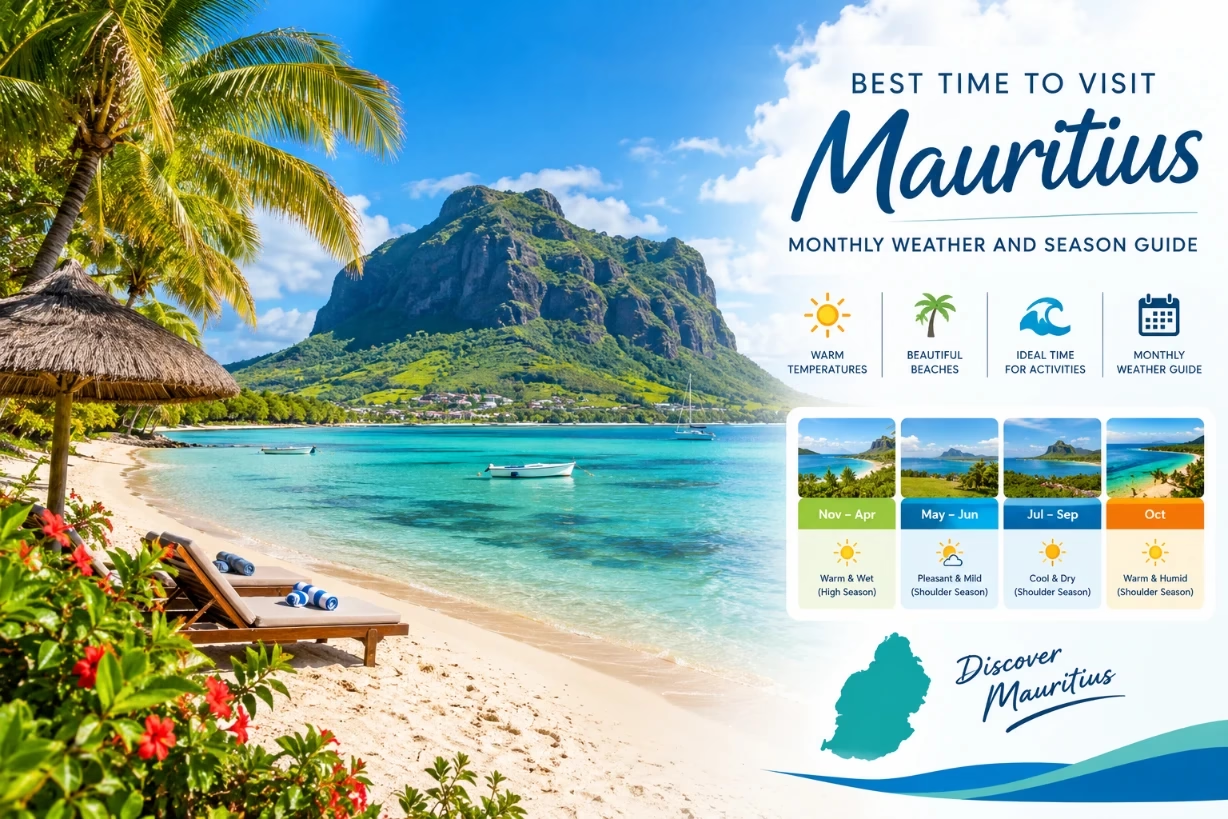
The best time to visit Mauritius usually runs from May to October, when the weather is dry, sunny, and less humid, with calmer seas and cooler nights. If you love lush scenery, warm water, and fewer crowds, November to early December and late March to April are also beautiful shoulder seasons.
If you are planning a trip and trying to figure out the best time to visit Mauritius, you are already on the right track. This island may be small on the map, but its weather and seasons change a lot through the year. If you pick your month wisely, you get calmer seas, better prices, and the kind of experience that fits your style, whether that is sunbathing, diving, hiking, or just doing nothing with a coconut in your hand.
How Mauritius Seasons Work: Quick Overview
Mauritius sits in the southern Indian Ocean, just below the equator. That means seasons are flipped compared with North America and Europe. When it is summer in the United States, Mauritius is in its cooler, drier winter. When the US is in winter, Mauritius is in hot, humid summer.
Here is the simple breakdown I keep in mind when thinking about the best time to visit Mauritius:
- Summer (hot, humid, cyclone season): November to April
- Winter (cooler, drier, windier on coasts): May to October
- Peak tourist time: December to early January and July to August
- Best weather for most travelers: May, June, September, October
Even in the wetter months, Mauritius rarely has full weeks of rain. You might get short heavy showers, then bright sun again. Temperatures near the coast stay warm all year, so there really is no month when a visit is impossible. The trick is matching your own idea of paradise with what each month offers.
Monthly Weather Guide: Best Time To Visit Mauritius For You
January: Hottest, Humid, And Cyclone Risk
January falls in the peak of Mauritian summer. Daytime temperatures along the coast often sit around the upper 80s Fahrenheit, and humidity is high. The sea is like a warm bath, with great visibility for diving and snorkeling when conditions are calm.
This is also one of the main cyclone months. That does not mean a storm will hit while you are there, but there is a higher risk of heavy rain, strong winds, and temporary travel disruption. If you are looking at the best time to visit Mauritius for guaranteed blue skies, January is a bit of a gamble.
On the other hand, if your priority is warm water and you are okay with afternoon showers and sticky air, you might still enjoy it. Just consider trip insurance and keep plans flexible.
February: Very Similar To January, But Slightly Quieter
February is another hot and humid month, with strong sun and very warm seas. Cyclone season continues, and rainfall levels are usually high, especially in the central plateau where it is cooler but wetter.
Because the New Year holiday crowds have eased, you may find better rates at some resorts. If you want to visit but cannot handle heavy humidity, this may not feel like the best time to visit Mauritius for you personally. For water sports fans, though, the ocean conditions can be rewarding between storms.
March: Heat Eases A Little, Seas Still Warm
By March, the worst of the summer crowds have gone, and while it is still hot, there is a very gentle shift toward slightly less extreme humidity. The sea keeps that velvety warm feel that divers and snorkelers love.
There is still a chance of cyclones and strong storms, but the risk slowly begins to drop as the month goes on. If you are aiming for the best time to visit Mauritius for a mix of tropical heat and fewer tourists, late March can be a nice sweet spot, as long as you keep an eye on weather updates.
April: Shoulder Season Charm And Softer Sun
April often feels like a bridge between full summer and the cooler dry season. Temperatures are still warm enough for the beach, often in the low to mid 80s Fahrenheit on the coast, but the sun is less harsh and evenings start to feel a bit more comfortable.
Rainfall starts to drop, especially toward the end of the month, and cyclone risk is much lower than in January or February. I personally see late March to April as a quiet candidate for the best time to visit Mauritius if you want warm weather without full-on summer intensity.
Families, couples, and honeymooners often like this period because hotels and flights are usually more affordable compared with December and early January, and the general mood on the island is calmer.
May: Start Of The Dry Season And Great All-Round Month
May is where things begin to get really comfortable. The air dries out, temperatures cool slightly, and rain becomes less frequent. Daytime highs near the coast often hover around the high 70s to low 80s Fahrenheit. The sea stays warm enough for easy swimming, but you get fresher evenings and clear skies.
If you ask me for a simple answer on the best time to visit Mauritius, May almost always comes up. It works well for beach time, hiking in places like Black River Gorges National Park, and sightseeing without feeling drained by humidity. Plus, you avoid the higher winter holiday prices and the intense heat of full summer.
June: Cooler Nights, Ideal For Active Travelers
June moves deeper into the Mauritian winter. The south and east coasts can feel windier, thanks to the trade winds, which is amazing if you are into kitesurfing or windsurfing. The north and west coasts are usually more sheltered, so families often prefer those areas during this time.
Temperatures commonly sit around the mid to high 70s in the day and can drop into the low 60s at night, especially inland. You may want a light sweater after sunset, but you will still be fine in beachwear during the day. For travelers who burn easily or dislike sticky heat, June can absolutely feel like the best time to visit Mauritius.
July: Coolest Month And Very Popular With Europeans
July is one of the coolest and driest months of the year, though “cool” in Mauritius is still mild compared with many places. Days are pleasant, the air is crisp, and the risk of heavy rain is low. It is also a favorite month for visitors escaping the European summer crowds in other destinations.
Because of those trade winds, the south and east can feel quite breezy, sometimes even chilly in the evenings. If you choose a resort on the west or north coast, you will usually have a more sheltered beach. Surfers and kitesurfers often love July, and I think of it as the best time to visit Mauritius for wind-based water sports.
August: Similar To July, With Lively Holiday Vibe
August continues the pattern of dry, pleasantly cool weather, with reliable sunshine and very manageable humidity. The sea is a bit cooler than in summer, but still very swimmable. The winds remain strong in some coastal spots.
This month often feels lively, with school holiday travelers from different countries enjoying the island. If you want a festive atmosphere and good weather rather than quiet isolation, August can easily count as your personal best time to visit Mauritius.
September: Warming Up, Clear Skies, Great For Exploring
September starts to feel like early spring in Mauritius. The air warms up slightly, and the wind slowly calms down compared with July and August, especially toward the end of the month. Rainfall is still low, and days are often beautifully clear.
This is an excellent month for scenic drives, hikes, boat trips, and photography. The light can be crisp and bright, and tourist levels are usually lower than in the peak winter school holidays. For many travelers, especially those who like to mix nature and beach time, September might be the best time to visit Mauritius.
October: One Of The Best Months Overall
October is one of my favorite answers when someone asks about the best time to visit Mauritius. Days are warmer but not yet at the full summer heat, humidity is still moderate, and seas are calm and inviting. Rain begins to increase slightly late in the month, but heavy downpours are still not common compared with summer.
October works for pretty much every travel style. Families, honeymooners, solo travelers, and adventure lovers all tend to find a sweet spot here. You can snorkel, dive, hike, or lay on the beach without worrying too much about bad weather or extreme temperatures.
November: Start Of Summer, Hotter Days, Lush Landscapes
November marks the start of the official summer season in Mauritius. Temperatures climb, humidity rises, and landscapes start to look greener and more tropical again. You may see more passing showers, often in short bursts, followed by sunshine.
If you prefer that classic tropical feel with strong sun, bright blue water, and lush plants, November can be your best time to visit Mauritius. Cyclone risk is still relatively low compared with the core months of January and February, although the broader cyclone season technically begins in November.
December: Peak Holiday Season, Festive And Busy
December in Mauritius feels joyful and vibrant. Resorts decorate for the holidays, the mood is festive, and beaches are popular. The weather is hot and humid, and showers become more frequent, especially in the afternoons.
This is also when prices rise, and availability at top resorts can get tight. If you dream of a tropical Christmas or New Year, you will likely see December as the best time to visit Mauritius, but I strongly suggest booking early and being ready for some heat and occasional storms.
Dry Season vs Wet Season: Choosing Your Style Of Trip
Another way to think about the best time to visit Mauritius is to focus less on exact months and more on the dry season versus the wetter season. Each has its own mood and benefits.
Dry Season (May To October): Cooler, Clearer, Great For Activities
From May to October, Mauritius enjoys its cooler, drier winter. Humidity is low, skies are often clear, and rainfall is relatively light, especially along the coasts. The central plateau can be several degrees cooler, which feels nice for hiking and exploring villages.
This is usually the best time to visit Mauritius if you care about:
- Comfortable temperatures for sightseeing and outdoor adventures
- Lower cyclone risk and more stable weather
- Wind sports like kitesurfing and windsurfing, especially June to August
- Clearer hiking trails and less mud in forested areas
The only trade-off is slightly cooler sea temperatures and breezier conditions on south and east coasts. If you are focused on pure beach lounging and very warm water, you might lean toward the shoulder or early summer months instead.
Wet Season (November To April): Hot, Humid, And Very Tropical
The wet season brings that classic tropical island feeling. You get stronger sun, more intense colors, and warm, soft water. Showers and storms can appear quickly, but they often pass fast along the coasts.
This period matches the best time to visit Mauritius for travelers who want:
- Hot, humid weather that feels deeply tropical
- Very warm sea temperatures for snorkeling and diving
- Lush scenery with greener hills and waterfalls
- Festive atmosphere in December and early January
The main trade-offs: higher cyclone risk, especially January and February, higher humidity, and sometimes more mosquitoes in certain areas. If your travel dates are fixed in this season, I would aim for late November or April to balance warmth with slightly less weather drama.
Best Time To Visit Mauritius For Different Travel Goals
Best Time For Beach Holidays
If your dream is long, lazy beach days with calm seas and good sun, I would put the best time to visit Mauritius in these ranges:
- Late April to June
- September to early November
During these months, you usually get a mix of warmth, plenty of sunshine, and manageable humidity. Sea conditions are friendly for casual swimming and paddling, and there is less risk of severe storms compared with the heart of summer.
Best Time For Diving And Snorkeling
Diving is possible all year, but the best time to visit Mauritius for underwater visibility and comfort often falls between late October and December, and again in April. The sea is warm, and visibility can be excellent when winds are not too strong.
North and west coast dive sites are usually more sheltered during the windy winter months, while the east and south can shine when conditions are calm. If diving is your main focus, I would avoid peak cyclone months whenever possible and aim for shoulder periods like November or April.
Best Time For Hiking And Nature
If you want to hike Le Morne Brabant, explore Black River Gorges, or wander among tea fields and viewpoints, cooler and drier weather feels kinder on the body. For this, the best time to visit Mauritius usually sits from May through October.
Trails are less slippery, you sweat less, and views can be clearer. Just bring a light layer because the central highlands are cooler than the coast, especially early in the morning and at dusk.
Best Time For Honeymoons And Romantic Trips
For honeymoons, I always think about a balance of good weather, atmosphere, and value. The best time to visit Mauritius for romance often falls in:
- Late April to June
- September to early November
You avoid the busiest Christmas and New Year rush, as well as heavy cyclone risk, but still enjoy warm days and beautiful beaches. Many resorts offer better deals during these shoulder seasons, so you can pick a nicer room or add special experiences without pushing your budget too far.
Best Time For Budget Travelers
If your main concern is value, look for months just outside the main peaks. For smaller crowds and kinder prices, the best time to visit Mauritius from a budget angle usually includes:
- Late March and April
- May and early June
- September
In these windows, flight prices and hotel rates are often softer, and you still get good weather. You may also find more flexibility with room categories and last-minute upgrades.
Regional Climate Differences Across Mauritius
While Mauritius is small, it still has some local climate differences that matter when you think about the best time to visit Mauritius and where to stay on the island.
North Coast: Warm And Generally Drier
Areas like Grand Baie and Trou aux Biches on the north coast tend to be a bit drier and sunnier, especially in winter. Winds are usually less intense than on the east coast. This is a good choice if you visit in June, July, or August and want more stable beach weather.
West Coast: Calm Seas And Gorgeous Sunsets
Flic en Flac, Tamarin, and Le Morne on the west coast enjoy beautiful sunsets and often calmer seas. The west can feel warmer and more sheltered, especially in winter, which makes it a favorite for families with kids and for travelers who dislike strong wind.
East And South Coasts: Windier, Wilder, Great For Water Sports
The east and south coasts are more exposed to the trade winds, especially from June to September. They can feel cooler and breezier, with stronger waves in some areas. Kitesurfers and windsurfers love places like Belle Mare and the Le Morne lagoon in these months.
Central Plateau: Cooler And Wetter
Inland towns on the higher plateau are cooler and often wetter than the coastal zones. When you think of the best time to visit Mauritius for a mix of beach and inland trips, remember you might need a light jacket or rain layer for day trips to these higher areas, even when the coast feels hot and dry.
Practical Tips For Timing Your Trip
After going through all the seasons and months, here is how I would sum up the best time to visit Mauritius in real-world terms:
- If you want overall best balance: aim for May, June, September, or October.
- If you love heat and lush, tropical vibes: pick November, December, or April, but watch the weather forecast.
- If you are into wind sports: target June to August, and stay on the south or east coasts.
- If you are sensitive to heat: choose July or August and consider the north or west coasts.
No matter when you decide to go, bring good sun protection, a light rain jacket, and at least one warmer layer for evenings, especially if you plan any inland or highland excursions. That way, whatever month you choose as your personal best time to visit Mauritius, you stay comfortable and can enjoy the island fully.