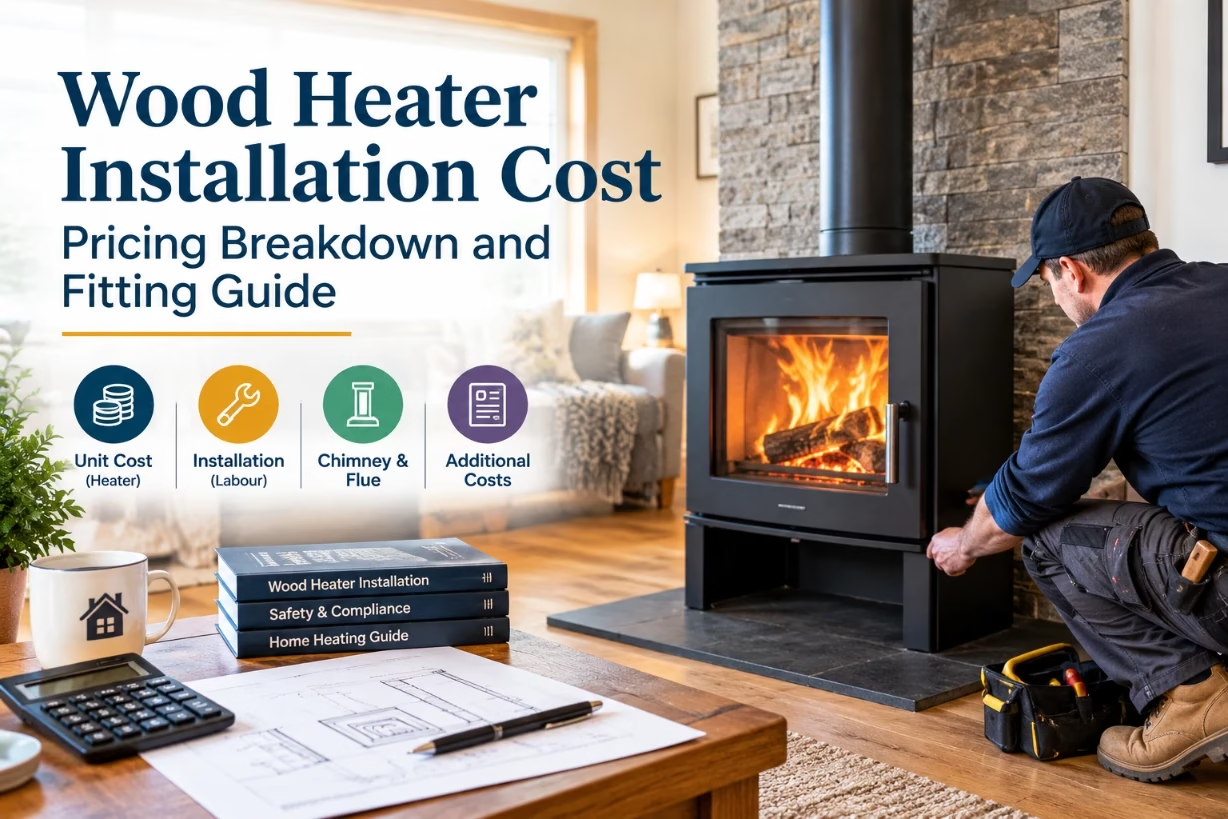
Typical wood heater installation cost ranges from $2,500 to $6,500 in the United States, depending on the heater type, chimney or flue work, permits, and labor. Simple inserts into an existing chimney sit at the low end, while new freestanding stoves with full chimney systems land at the higher end.
Why Wood Heater Installation Cost Matters More Than The Heater Price
When someone starts planning a wood heater, they usually look at the price tag on the stove first. I did the same the first time I helped a friend plan his system. The surprise comes later, when the install quote lands and the wood heater installation cost suddenly doubles or triples the budget.
The heater itself might be 800 or 2,000 dollars, but safe installation, flue or chimney, floor and wall protection, permits, and inspections can easily run another 1,500 to 4,500 dollars. If you only plan for the appliance price and ignore the real wood heater installation cost, you either blow the budget or you cut corners on safety. Neither ends well.
In this guide I go line by line through what you actually pay for, what you can and should do yourself, what must be left to licensed installers, and how to fit everything into a realistic budget without putting your home or family at risk.
Average Wood Heater Installation Cost Ranges In The U.S.
Let me start with real world ranges I see again and again. These are typical for many parts of the United States, but local labor and building code rules will push you a bit lower or higher.
Typical total cost by installation type
These numbers include both the heater and the install work.
1. Insert into an existing masonry fireplace
If you already have a working brick or block fireplace and chimney, a certified wood insert is usually the cheapest route.
Typical total: about 2,500 to 4,000 dollars
Rough split:
Heater or insert: 1,200 to 2,000 dollars
Installation and parts: 1,000 to 2,000 dollars
2. Freestanding wood stove with new factory chimney
This is what many people picture in a living room or cabin. A cast iron or steel stove, with black stovepipe transitioning to insulated stainless chimney through the ceiling and roof.
Typical total: about 3,500 to 6,500 dollars
Heater: 1,000 to 3,000 dollars
Installation and chimney system: 2,000 to 3,500 dollars
3. Basement or garage wood heater installation
Basements can go either way on price. Sometimes they are simple straight shots up through the house. Other times they need long horizontal runs, support brackets, or an outside chimney stack.
Typical total: about 3,000 to 7,000 dollars depending on how far the flue must travel and how hard it is to access the route.
Key Factors That Drive Wood Heater Installation Cost
Two houses side by side can have totally different quotes for the same stove. The reason is not only the hourly rate of the installer. It is all the small parts of the install that add up. I will walk though them so you can see where your money goes and where you have room to make choices.
1. Type and size of wood heater
The heater itself is step one in your wood heater installation cost. Modern EPA certified stoves and inserts usually cost between 1,000 and 3,500 dollars. High end designer units can go beyond 5,000 dollars, but most homeowners stay under that.
Key details that affect price:
- Firebox size and heat output Larger fireboxes that can hold more wood and deliver longer burns cost more.
- Material Cast iron and soapstone stoves usually cost more than basic steel box models.
- EPA certification level Ultra low emission models usually carry a premium but may qualify for tax credits or rebates that lower net wood heater installation cost.
2. Chimney or flue system
The chimney is often the single biggest cost factor after the heater. A full length insulated stainless steel chimney from stove to roof exit can easily run 1,200 to 2,500 dollars just in parts before labor.
Things that change chimney costs:
- Height More height means more pipe, more brackets, and sometimes roof braces.
- Number of turns Every elbow and offset adds parts and labor time.
- Inside vs outside A straight inside run through the house is often cheaper and draws better, while an external chase or exposed stack can cost more to support and seal.
- Masonry chimney liner If you reuse an old brick chimney, you may need a stainless liner, which can cost 800 to 2,000 dollars added to your wood heater installation cost.
3. Labor rates and installer experience
Labor is where quotes really spread. A licensed, insured installer with deep experience may cost more per hour, but usually saves time, prevents code problems, and avoids rework. Typical labor charges for a standard, single story install often land between 800 and 2,000 dollars. Two story jobs, roof pitches that need special safety gear, or tricky retrofits can push that higher.
I always suggest asking how many similar installs the person does each year, and if they handle permits and inspection coordination for you. That service is part of wood heater installation cost, and often worth paying for, because code issues can force expensive changes later if nobody checked local rules first.
4. Venting route and house layout
Where you place the heater in your home has a huge effect on total cost. A straight vertical run in the center of a single story home is basically the dream layout. Once you start crossing roof lines, dodging floor joists, or turning to exit on an exterior wall, the labor time and venting parts rise quickly.
Basements under finished main floors often require more careful cutting, support, and sealing around each level, which adds to total wood heater installation cost even if the heater price itself is modest.
5. Hearth pad, wall shields, and clearances
Every wood heater has listed minimum distances from the firebox to walls, ceilings, and furniture. If your planned location does not meet those clearances, you must add non combustible protection like a hearth pad or wall shield.
Common cost items include:
- Prefabricated hearth pad: 250 to 600 dollars.
- Custom tile or stone hearth: 600 to 1,500 dollars or more.
- Wall shield using cement board and tile or stone: 300 to 900 dollars in materials and labor.
These protection materials do more than just look good. They protect your framing structure from heat and sparks, which is priceless compared to the risk of a house fire. Still, they do add to total wood heater installation cost, so it makes sense to plan them early, not leave them as a surprise item at the end.
6. Permits, inspections, and insurance requirements
Most U.S. cities and counties require a mechanical or solid fuel appliance permit for a new wood burner. Permit fees alone can range from 100 to 400 dollars, and you might have separate fees for plan review and final inspection.
Your home insurance company may also want proof of:
- Model and serial number of the heater.
- Professional installation.
- Passed inspection with the local authority.
Ignoring this step can come back to hit you in two ways. First, if something goes wrong, your claim could be questioned. Second, they may raise your rate or refuse coverage if they find an unpermitted wood heater. Building permit and insurance paperwork are invisible parts of wood heater installation cost, but they protect your long term finances.
Detailed Pricing Breakdown For A Sample Wood Heater Install
To make this less abstract, I will walk through a common scenario: a freestanding, medium size EPA certified stove in a single story living room with a straight chimney run through the ceiling and roof.
Here is a realistic breakdown of wood heater installation cost in that situation:
Appliance
Mid range EPA certified steel stove: 1,800 dollars.
Chimney and venting parts
Stovepipe sections and fittings inside room: 250 dollars.
Ceiling support box and trim: 200 dollars.
Double wall insulated stainless chimney (20 feet): 1,200 dollars.
Roof flashing, storm collar, cap: 250 dollars.
Brackets and hardware: 100 dollars.
Total venting: 2,000 dollars.
Hearth and wall protection
Prefabricated ember protection hearth pad: 400 dollars.
Simple non combustible wall shield behind stove: 350 dollars.
Total: 750 dollars.
Labor
Two installers for one full day plus travel: about 1,400 dollars.
Permits and inspection
Mechanical permit: 180 dollars.
Inspection fee: 60 dollars.
Total: 240 dollars.
Grand total wood heater installation cost
1,800 + 2,000 + 750 + 1,400 + 240 = 6,190 dollars.
This is a clean, straightforward job. If you already had a rated hearth and a good existing chimney, or if you chose a smaller stove, your total might be closer to 3,000 to 4,000 dollars. If you have a two story house, a difficult roof, or need structural work, wood heater installation cost can climb beyond 7,000 dollars.
Hidden Costs Owners Often Forget To Include
When I talk with homeowners after their projects, the same “forgotten” items pop up again and again. Including them in your plan gives you a clearer budget and less stress.
Chimney cleaning and first year maintenance
After the first heating season, most installers or sweeps recommend a cleaning and full safety check. That visit usually runs 150 to 300 dollars. I consider that part of the first year wood heater installation cost because it finishes the setup and fine tunes your system.
Moisture meter and safe wood storage
A basic handheld wood moisture meter costs around 25 to 50 dollars and is worth every penny. Burning dry hardwood not only keeps your glass and chimney cleaner, it reduces smoke and creosote. Add in a covered wood rack or shed, and you might put another 200 to 600 dollars toward the full cost of “owning” a wood heater setup.
Carbon monoxide and smoke alarms
Every home with a wood burner should have working smoke alarms and at least one carbon monoxide alarm on each sleeping level. If your existing devices are old or missing, plan maybe 100 to 250 dollars to bring them up to date. It is a small slice of wood heater installation cost that buys a huge safety margin.
DIY Versus Professional Installation: Where You Save And Where You Don’t
I get a lot of questions about how much of a wood heater install a handy homeowner can do. The answer depends on your local code, your comfort level on roofs and ladders, and your willingness to own the risk if something goes wrong.
Tasks some homeowners safely handle
If your building department allows it, you may legally:
- Build or tile a hearth pad to manufacturer specs.
- Install a non combustible wall shield.
- Assemble and level the stove on the hearth.
- Run single wall stovepipe inside the room, following the manual carefully.
Doing these steps yourself might cut 300 to 800 dollars from your wood heater installation cost.
Tasks usually left to licensed pros
The parts I strongly suggest leaving to a qualified installer include:
- Cutting holes through ceilings and roofs.
- Installing insulated chimney sections and roof flashing.
- Re lining old masonry chimneys.
- Pulling permits and coordinating inspections.
These steps carry structural, fire, and water leak risks. A poorly flashed roof can cause thousands of dollars in hidden water damage. A badly sized or supported chimney can lead to draft problems or, in the worst case, a chimney fire. Saving a few hundred dollars of wood heater installation cost is never worth a long term hazard.
How To Plan Your Wood Heater Installation Budget Wisely
Instead of starting with a random stove you saw online, I suggest working backward from your budget and your goals. That approach keeps both the heater price and full wood heater installation cost under control.
1. Decide your primary goal
Ask yourself if the wood heater will be your main source of heat, a backup during outages, or mostly for comfort and mood. A primary heat source calls for a larger, advanced model with very dry fuel and strong chimney. A “backup and cozy nights” heater can be smaller and simpler as long as it is safe and code compliant.
2. Set a full project budget, not just heater price
Look at your savings and decide the total you can spend this year. For many households, that number is in the 3,000 to 6,000 dollar range. Then assume no more than half of that total goes to the stove itself. If you buy a 3,000 dollar appliance on a 3,500 dollar total budget, your wood heater installation cost will almost always blow past what you can handle.
3. Get at least two written quotes
Talk with two or three local installers who know your building department rules. Ask each for:
- An itemized quote listing heater model, chimney type, and all major parts.
- Permit and inspection steps and who handles them.
- Estimated total wood heater installation cost including tax and fees.
Comparing these line by line teaches you a lot about what is truly needed versus what is an upgrade. Do not be shy about asking why a certain part or step is on the list.
Cost Saving Tips That Do Not Sacrifice Safety
There are smart ways to lower your wood heater installation cost without cutting corners on code or good practice.
Choose the simplest safe vent route
Whenever possible, place the stove so the chimney rises straight up with minimal elbows, ideally near the center of the home for better draft. A more direct route uses fewer parts and less labor, and also tends to burn cleaner.
Plan ahead for rebates and credits
Some EPA certified wood heaters that meet certain efficiency levels qualify for federal or state tax credits. This will not change the sticker price but it can lower the net wood heater installation cost when you file your taxes. Your installer or stove dealer can often tell you which models qualify right now.
Reuse safe existing structures when allowed
If you have a sound masonry chimney that passes inspection, relining it can be cheaper than building a whole new factory chimney from scratch. Do not assume reuse is safe by default, though. Always have a pro check the old chimney before building your plan around it.
Fitting Guide: Step By Step From Idea To First Fire
Cost is only half the story. The other half is how the heater actually fits into your life and your home layout. Here is a simple fitting guide you can follow.
Step 1: Pick the room and exact spot
Walk through your home and find a location that:
- Is near the center of the area you want to heat.
- Has room for clearances from walls and furniture.
- Allows a fairly straight chimney path up or out.
Mark out the footprint of the stove and hearth with tape on the floor. Live with that outline for a few days so you can feel how it changes traffic flow and furniture placement.
Step 2: Size the heater to the space
Most stoves list a recommended square footage range. Be honest about your home’s insulation, window quality, and climate. A small, tight home in a mild area needs far less output than a drafty farmhouse in a cold northern state. Oversizing can cause short, smoky burns and creosote buildup. Undersizing can leave you cold on the harshest nights. Proper sizing prevents waste and keeps your wood heater installation cost working efficiently for you.
Step 3: Match chimney type to layout
Your installer will help you choose between:
- Straight through ceiling and roof factory chimney.
- Rear exit into an existing masonry chimney.
- Wall exit to an exterior chimney stack.
Each layout has its own wood heater installation cost profile, but the best choice is the one that drafts well, stays within code, and suits the structure of your home.
Step 4: Confirm code rules before buying anything
Before you swipe a card, call your building department. Ask about:
- Permit type and fees.
- Required clearances and hearth dimensions.
- Approved chimney types.
Knowing the rules early keeps you from buying a bargain stove that cannot be legally installed in your town, which would turn into the ugliest type of wood heater installation cost: money spent on something you cannot use.
Step 5: Schedule install and plan for inspection
Once you sign the quote, set dates both for installation and for inspection. During the install day, stay nearby so you can answer questions about final placement and review each stage. When the inspector visits, walk through with them if possible and ask about any notes they make. Passing inspection is your final green light that the money you spent on wood heater installation cost is backed by a safe, legal system.
Final Thoughts On Balancing Cost, Comfort, And Safety
A wood heater brings a kind of warmth that forced air systems never match. There is the glow of the fire, the crackle of the wood, and the comfort of knowing you can keep your family warm even if the power grid goes down. The tradeoff is that you must take installation seriously and respect the true wood heater installation cost, not just the price sticker on the stove.
When you build your budget around all the pieces we walked through heater, chimney, hearth, labor, permits, safety gear you end up with a system you can use for decades. Cutting the wrong corners might save a few dollars today but risks bigger bills, or worse, in the future. If you treat wood heater installation cost as an investment in both comfort and safety, the return over many winters is hard to beat.