
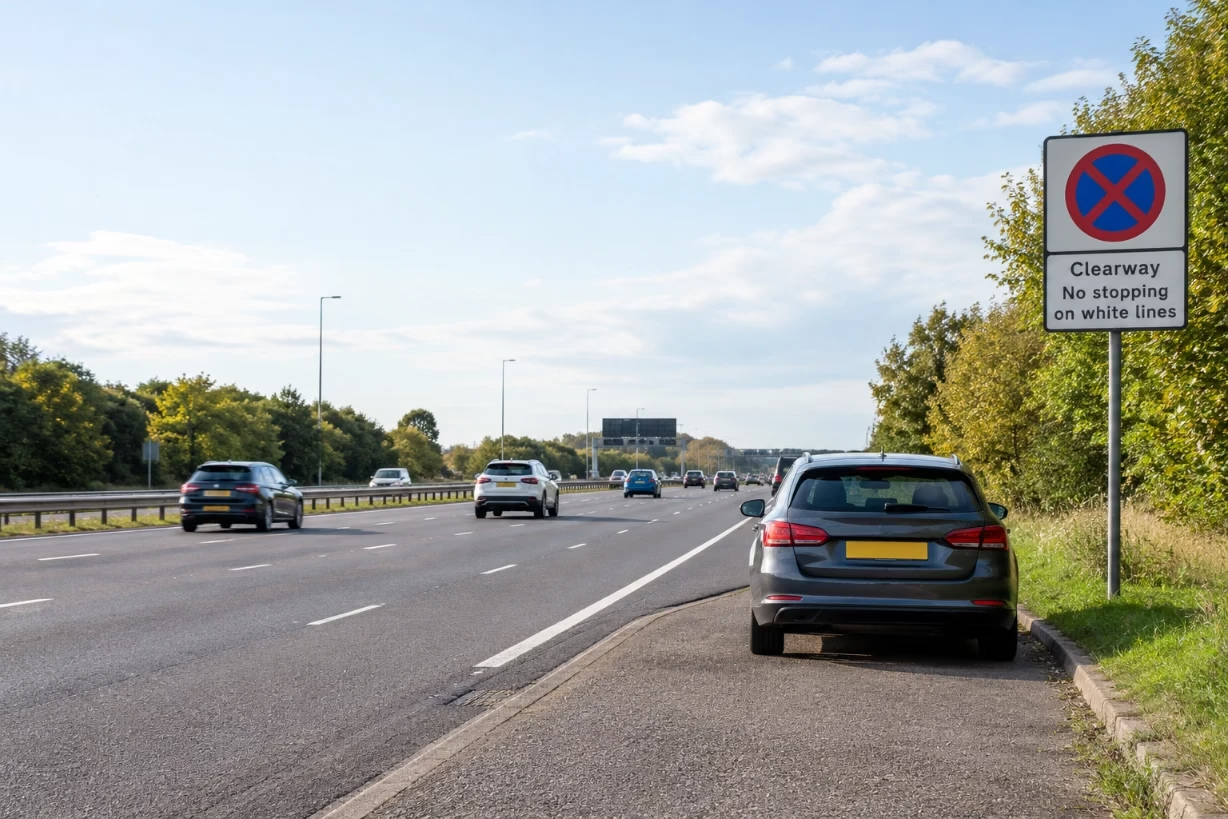
On a clearway, you may stop only in a true emergency, when directed by police or traffic officers, when your vehicle has broken down and cannot safely move, or where specific signs clearly show that a short stop is allowed. Normal picking up or dropping off is not allowed on a clearway.
What a Clearway Really Is and Why It Matters
Before I walk through when may you stop on a clearway, I want to clear up what a clearway actually is. A clearway is a stretch of road where drivers are not allowed to stop or park their vehicles during certain times, except in a few very limited cases. Road signs and road markings will tell you when the clearway rules apply, and sometimes they apply 24 hours a day.
The goal of a clearway is simple. Traffic should keep moving safely and smoothly, with no random stops that block the flow. If you have ever been stuck in a backup because one car decided to stop in the wrong place, you already know why clearway rules exist. When may you stop on a clearway becomes more than a test question. It becomes a safety issue for everyone on the road, including you.
How To Recognize a Clearway on the Road
If you want to follow Highway Code rules, the first step is learning how to spot a clearway before you think about when may you stop on a clearway. You will usually see:
A clearway sign: Often a blue circle with a red border and a red diagonal cross, along with a plate that shows the time period the clearway is in force. Some roads use a red circle with a blue background and one red line through it for no waiting, and a cross for no stopping. The exact look can vary by country, but the idea is the same. Do not stop there.
Time plates: These show when the rules apply, such as rush hour times in the morning and evening. Outside those times, normal stopping or parking might be allowed, but you should always double check other signs on the road.
Long stretches: Clearways often cover long busy routes, such as main roads into a city, rural main roads, or dual carriageways. You are meant to keep moving, not stopping for a quick text or snack.
Before you test your luck and ask yourself when may you stop on a clearway, train yourself to notice the signs and the feel of the road. If traffic is fast and the road looks like a major route, treat it with extra care.
Core Rule: You Must Not Stop on a Clearway
The basic rule is firm. You must not stop on a clearway while the clearway rules are in force. That means no parking, no waiting, no dropping someone off, no quick selfie, and no quick scroll through your messages. If your wheels stop turning for anything other than a real reason allowed by the Highway Code, you risk a fine, penalty points, and putting others in danger.
Thinking in plain terms, when may you stop on a clearway is really the same as asking, when is it safe and legal to break this strong rule. The law gives only a few narrow doors for that, and they all connect to safety and necessity, not convenience.
Legally Allowed Reasons To Stop on a Clearway
There are only a handful of times when may you stop on a clearway without breaking the rules. I am going to walk through each one with examples, so it sticks in your memory when you are behind the wheel.
1. Stopping for Traffic, Signals, or Queues
The first reason is obvious but still worth saying. You may stop on a clearway when traffic conditions force you to. If there is a red light at a junction, heavy traffic ahead, or a queue forming, you are allowed to stop your vehicle. In fact, you must. Safety and traffic control always trump clearway rules when they clash.
Here are simple cases where when may you stop on a clearway becomes automatic and legal:
- Red traffic light on the clearway.
- Traffic jam or slow-moving queue ahead.
- Stopped at a pedestrian crossing where people are crossing.
- Waiting behind a vehicle that is turning right and must wait for a gap.
In all these moments, you are not choosing to stop. The conditions demand it. As soon as traffic starts moving again and it is safe, you should move too.
2. Stopping for Police, Traffic Officers, or Other Authorized People
Another clear answer to when may you stop on a clearway is when a police officer, traffic officer, or other authorized person tells you to stop. If they signal you to pull over, you must obey, even if you are in the middle of a clearway section.
For example, an officer might need to:
- Carry out a routine check on your vehicle.
- Re-route traffic around a crash ahead.
- Ask you to give a statement or share dashcam footage.
When you stop, do it as safely as possible. Signal early, check your mirrors, and pull as far off the main traffic lane as you can. When may you stop on a clearway in this situation is decided for you by the officer, and that makes your duty to obey clear.
3. Genuine Emergency: When Stopping Is the Safest Choice
A true emergency is one of the strongest answers to when may you stop on a clearway. If carrying on would put you, your passengers, or others in danger, you are allowed to stop. Safety comes first.
Some real emergencies might be:
- Sudden medical crisis, such as chest pain, losing vision, or a passenger fainting.
- Loose cargo that could fall off your vehicle and hit others.
- Severe weather that makes it impossible to see or control your vehicle.
In any of these events, you should try to reach a lay-by, hard shoulder, or other safe spot if you can. If you must stop on the carriageway itself, turn on your hazard lights right away. Once again, when may you stop on a clearway is not about comfort. It is about life and safety.
4. Mechanical Breakdown Where You Cannot Keep Moving
Sometimes your car chooses the worst time to act up. If your vehicle has a sudden breakdown and you cannot keep driving, that is another legal reason for when may you stop on a clearway. The key is that your vehicle can no longer move safely, not just that a warning light came on and you want to check your phone.
If you break down on a clearway, here is what I would do:
- Signal and move off the traffic lane as far as possible.
- Turn on hazard warning lights immediately.
- If safe, get everyone out of the car and behind a barrier or far off the road.
- Use high-visibility clothing or torches if you have them and it is dark.
- Call roadside assistance or emergency services from a safe place.
When may you stop on a clearway because of a breakdown is simple. You are allowed to stop only as long as you need to handle the emergency, then you must remove the vehicle as soon as you can.
5. Where Specific Signs Show an Exception
Once in a while, there will be carefully signed exceptions that change when may you stop on a clearway. These might include short lay-bys, bus stops, or signed loading bays that sit inside a wider clearway route but have their own simple rules.
For example:
You might see a sign that says something like “Lay-by 400 yards” where drivers can pull in for a short rest. You may also see a bay where only buses can stop during clearway hours. Those are limited exceptions, and you cannot assume the whole clearway is fair game just because you see one bay.
The rule I follow is this. If a sign does not clearly tell you that stopping is allowed at that spot, then treat the whole stretch as no stopping at all. When may you stop on a clearway here is shaped by the signs, not by guesswork.
Common Illegal Reasons People Stop on a Clearway
Now I want to switch sides and call out the reasons that are not allowed, even if they seem harmless at the time. These are the habits that get drivers ticketed and sometimes cause real harm.
Stopping To Drop Off or Pick Up a Passenger
One of the biggest mistakes is thinking that a quick drop off or pick up is no big deal. On a clearway, it is not allowed during the restricted hours. When may you stop on a clearway does not include letting your friend hop out at the door of a shop, or picking up your kid right on the main road.
Even a brief stop can make other drivers brake hard or swerve. It only takes one second of surprise for a crash to happen. If you need to pick someone up, plan a side street meeting point or a safe parking spot nearby.
Stopping To Check Your Phone or Navigation
I know the pull of a buzzing phone or a confusing map. But pulling over on a clearway to “just check something” is still stopping and still illegal. When may you stop on a clearway does not cover checking messages, changing playlists, or typing a new address into your GPS.
If you need to adjust something, wait until you reach a service area, lay-by, or side road where stopping is clearly allowed. The short delay is far better than risking a crash or a fine.
Stopping To Rest or Eat
Driver fatigue is real and dangerous, but the answer is not to rest on the edge of a clearway. Parking on a busy fast road shoulder to eat a snack or take a nap can be deadly. Other drivers may not expect a stationary car, especially in low light.
Instead of trying to bend when may you stop on a clearway to your needs, plan ahead. Use official rest areas, service stations, or safe parking areas off the main route where you can relax without putting others at risk.
Stopping To View Scenery or Take Photos
Some clearways pass through beautiful areas, and it can be tempting to pull over for a picture. This is another clear no. When may you stop on a clearway does not include taking photos, watching wildlife, or enjoying a sunset from the side of the road.
If the view is worth a picture, chances are there is a signed viewpoint or lay-by somewhere nearby. Use that instead of stopping in a live traffic lane.
Penalties and Consequences for Stopping on a Clearway
Stopping illegally on a clearway can bring real costs, both financial and personal. While details vary by region, this is what usually happens if you ignore when may you stop on a clearway and park where you should not.
You can face:
- Fixed penalty fines that hit your wallet.
- Penalty points on your driving license.
- Your car being towed or impounded if left there.
- Higher insurance premiums after offenses.
Beyond legal penalties, the bigger risk is causing or worsening a crash. A car suddenly stopped on a clearway can create a chain reaction. Someone might swerve to avoid you and hit another car or a biker. When may you stop on a clearway is not just a test rule. It is a line between safe flow and sudden danger.
How To Plan Ahead So You Never Need To Stop on a Clearway
One of the best ways to avoid breaking clearway rules is to plan your trip so you do not even feel tempted. I like to think of it as setting yourself up to succeed so when may you stop on a clearway never even comes up during your drive.
Check Your Route and Fuel Early
Before a long drive, take a minute to look at your route and note where fuel stations, rest areas, and towns are. Top up your fuel before you hit long stretches of clearway or highway. Carry water and simple snacks so you are not forced to pull over somewhere unsafe if you get hungry or thirsty.
Use Rest Areas and Service Stations
Make it a habit to stop only at proper rest areas or service stations. These are designed for parking, toilets, food, and stretching your legs. They are far better places to handle calls, texts, or drowsiness than the side of a clearway, no matter how quiet the road looks.
Talk With Passengers Before You Start
If you are giving someone a ride, agree on pickup and drop off points that are safe and legal. Let them know that when may you stop on a clearway is very limited, and you will not stop somewhere unsafe just because it is closer to a door or gate. Most people respect that when you explain it clearly.
Highway Code Driving Test: How Clearway Questions Often Appear
If you are studying for a driving test, you will almost certainly see questions about clearways and stopping rules. The wording can change, but the idea is the same. You are being tested on when may you stop on a clearway and when you may not.
Typical questions might ask:
- On a road with clearway signs, when are you allowed to stop?
- Is it acceptable to stop on a clearway to pick up a passenger?
- What should you do if your vehicle breaks down on a clearway?
The correct answers always circle back to the same narrow reasons. Only stop for traffic conditions, signals, police directions, genuine emergencies, or breakdowns where you cannot move. When may you stop on a clearway outside of these reasons is almost always, you may not.
Putting It All Together: A Simple Way To Remember
If you want one simple rule to carry in your head, think of it like this. On a clearway, you keep moving unless safety or law forces you to stop. That short line holds the full meaning behind when may you stop on a clearway.
So, before you think about pulling over, ask yourself a few quick questions:
- Am I being told to stop by a signal, police, or traffic?
- Is this a real emergency or serious breakdown?
- Is there a clearly signed lay-by or bay that allows stopping?
If the answer to all three is no, then you already know the answer to when may you stop on a clearway at that moment. You keep moving and look for a safe, legal place to stop later.
Over time, this way of thinking becomes second nature. You read the road ahead, spot clearway signs early, and plan your stops wisely. That is how you protect your license, protect others on the road, and turn the Highway Code from a rulebook into simple, smooth driving habits.