
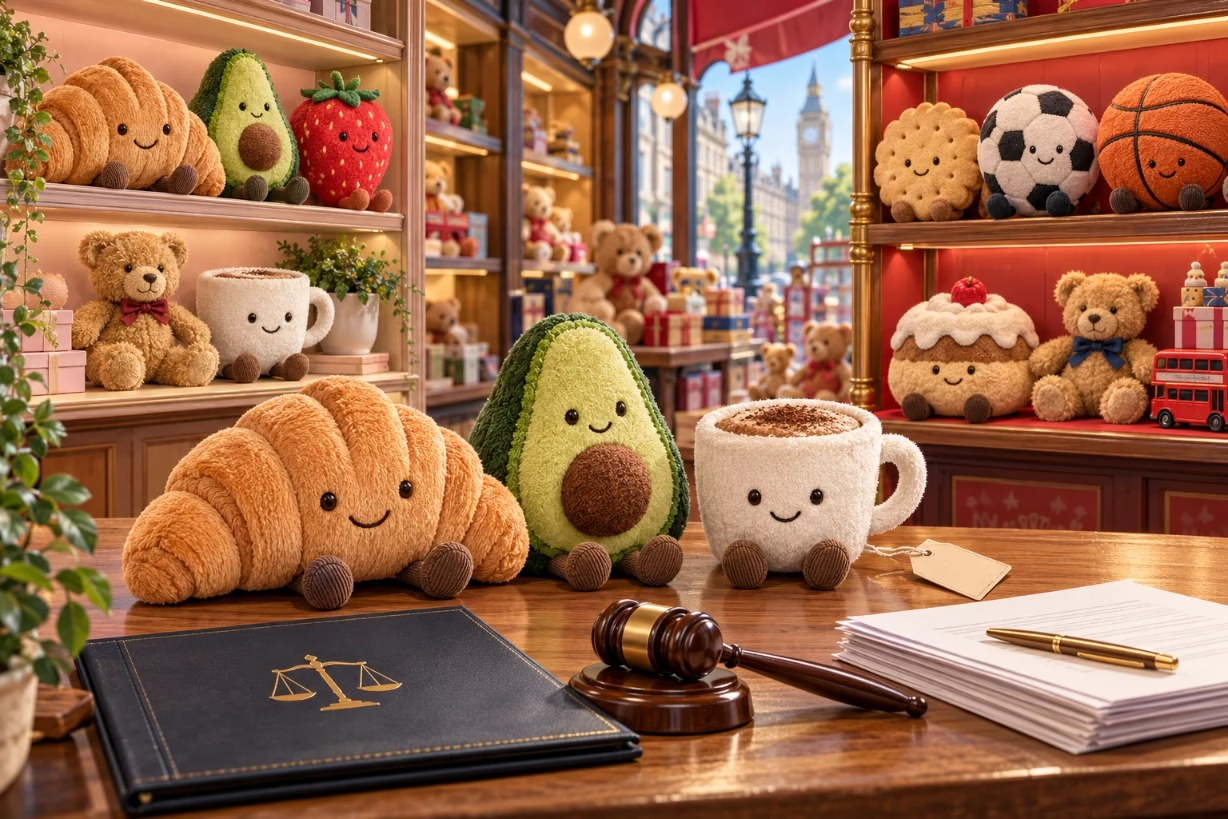
The Jellycat Hamleys trademark dispute centers on claims that Hamleys sold plush toys whose look and “feel” were so close to Jellycat’s famous designs that shoppers could think they were buying real Jellycat products, raising big questions about how far brand style can be protected in law.
Jellycat Hamleys Trademark Dispute: Why This Case Matters
When people search for the jellycat hamleys trademark dispute, they are usually trying to figure out two things at once. First, what exactly happened between these two famous toy brands. Second, what this kind of intellectual property fight means for design led businesses, collectors, and even casual shoppers who just like cute plush toys.
I want to walk you through this dispute in plain language, using real legal concepts but in a way that feels clear and grounded. Even if you are not a lawyer, you can still understand the key ideas. And if you are a founder, designer, brand manager, or just a Jellycat fan, you will see how this case connects directly to your world.
Quick Background: Who Are Jellycat And Hamleys
Jellycat is a British soft toy company that built a huge global following with its plush animals and especially its Amuseables line: smiling foods, sports balls, coffee cups, and other everyday objects turned into huggable characters. The brand lives on its very specific aesthetic: rounded shapes, friendly faces, muted but playful colors, and that instantly recognizable “cute but slightly odd” personality.
Hamleys, on the other hand, is one of the oldest and best known toy retailers in the world, famous for its flagship store on Regent Street in London. For years, Hamleys has sold many different toy brands, including Jellycat. That pre existing relationship is part of what makes the jellycat hamleys trademark dispute feel so striking. You do not usually expect an authorized retail partner to end up as a defendant in a high profile IP lawsuit.
How The Jellycat Hamleys Trademark Dispute Started
The current wave of legal action started in May 2026, when Jellycat filed a series of claims in the High Court in London against three retailers: Next Retail, Hamleys of London, and Bessie London. The core accusations involve both trademark infringement and passing off. A later set of court documents and law firm commentaries filled in more detail about what is actually at stake.
In very simple terms, Jellycat is saying that certain Hamleys plush toys, especially food and object themed designs like biscuits, sports balls, and other items, are so close in “look and feel” to Jellycat’s Amuseables that customers might believe they come from Jellycat or are somehow officially linked. The company argues that this similarity trades on its reputation and confuses buyers who are actively looking for the Jellycat vibe.
This is not Jellycat’s first fight over copycat products. In 2024, it went after Aldi over a dragon plush that Jellycat said looked strikingly similar to its Dexter Dragon. Aldi stopped selling the toy after the dispute, even though it did not admit liability. That earlier case set the tone for a tougher enforcement strategy which now continues in the jellycat hamleys trademark dispute.
Key Legal Concepts Behind The Dispute
To really follow the jellycat hamleys trademark dispute, you need to understand three main legal tools: trademarks, passing off, and design rights. They work together, but each covers something slightly different.
Trade Marks: Protecting Names, Logos, And Brand Signals
A trademark protects signs that tell people where goods or services come from. For Jellycat, this means the word “Jellycat,” various logo versions, and sometimes other marks linked to specific sub brands. Jellycat holds trademarks in the UK, EU, and US for things like plush toys, dolls, children’s products, and related goods.
Trademark infringement usually happens in one of two ways. Either someone uses the exact same mark for similar goods, or they use a confusingly similar sign so that an average shopper might think there is some connection. What makes the jellycat hamleys trademark dispute interesting is that Hamleys is not accused of slapping the Jellycat name on its own toys. Instead, the question is whether designs themselves, and the way the toys look, overlap so much with Jellycat’s brand identity that they blur the line.
Passing Off: Protecting Reputation And “Goodwill”
Passing off is a flexible common law claim used heavily in UK IP disputes. It protects the “goodwill” a business builds up in its name, products, and overall presentation. To win a passing off claim, a brand like Jellycat usually has to show three things:
- It has real goodwill and a strong reputation tied to its products.
- The defendant made a misrepresentation that could lead the public to believe its goods are connected to the claimant.
- That misrepresentation is likely to cause damage to the claimant’s business or reputation.
In the jellycat hamleys trademark dispute, Jellycat is essentially arguing that Hamleys sold plush toys whose designs are so Jellcat like that people could assume they are official Jellycat items or authorized spin offs. If a customer walks into a Hamleys store, sees a cute smiling avocado plush that looks almost exactly like an Amuseable, and then buys it thinking “this must be Jellycat,” that scenario becomes evidence for passing off.
Design Rights: Protecting Visual Appearance
Design rights focus on how a product looks, rather than the name or logo. Registered designs in the UK and EU protect features like shape, lines, contours, texture, and ornamentation. Jellycat has registered designs covering some of its toys and accessories.
In practice, a design infringement claim asks whether the accused product creates a similar “overall impression” to the registered design from the point of view of an informed user. Small differences in detail may not save a copy if the big picture looks too close. With something as style driven as Jellycat’s Amuseables range, design law becomes a powerful tool within the larger jellycat hamleys trademark dispute.
What Makes This Dispute Unusual
There are three angles that make the jellycat hamleys trademark dispute stand out from the usual IP stories about lookalike toys or fashion items.
1. Hamleys Is An Authorized Retailer
Hamleys has historically been a major outlet selling genuine Jellycat plush. So Jellycat is not just going after some random online seller or a budget supermarket. It is challenging the conduct of a long time partner. That raises practical questions about distribution contracts, brand control inside multi brand stores, and how retailers handle “inspired by” lines while also selling the real thing.
From a relationship point of view, it is almost like a trusted friend opening their own “dupe” stall next to your stand at the same market. Legally, that relationship does not change the rules about trademarks or passing off, but it does add layers to the commercial and emotional story behind the case.
2. The Fight Over A “Cute Aesthetic”
Many legal commentators have pointed out that the jellycat hamleys trademark dispute is part of a wider test of how far IP law can stretch to protect a general “aesthetic.” Jellycat’s style is built on a mix of ingredients: the particular eyes, the soft rounded shapes, the proportions of limbs, and the friendly expressions on everyday objects.
The law, however, is cautious about granting a monopoly over broad artistic themes like “cute fruit” or “smiling coffee.” The court will look closely at how specific Jellycat’s protected designs are, and whether the Hamleys toys cross the line into copying that specific combination rather than just sitting in the same broad genre of cute plushies.
3. The Rise Of “Dupes” Culture
Across beauty, fashion, homeware, and now toys, “dupes” have become normal talk on social media. Fans hunt for cheaper products that look or feel like high end originals. For some shoppers, this is smart budgeting. For many brands, it feels like a constant drain on the value they worked hard to build.
The jellycat hamleys trademark dispute sits right in the middle of that tension. Jellycat has a passionate fan base that often calls out copycat designs online. At the same time, retailers want to ride the wave of that popularity with their own private label or house brand items. The court’s ruling, whenever it comes, will send a strong signal about how far “dupe culture” can go in the plush toy space.
How Courts Look At Confusing Similarity
When a judge looks at the jellycat hamleys trademark dispute, they will not simply put two plush toys side by side and ask which one they personally like more. They follow structured tests, developed over many cases, to decide whether similarity is legally problematic.
Overall Impression, Not Tiny Details
Both passing off and design infringement pay more attention to overall impression than to close up pixel level differences. If the average consumer, seeing the products in a normal shopping environment, would say “that looks like a Jellycat,” then small tweaks to colors or stitching may not save the accused product.
For example, if a Jellycat Amuseable football plush has a particular face style, body roundness, and texture, and a Hamleys football plush repeats those cues very closely, the judge may see that as more than just following a trend. On the other hand, if Hamleys can show that its designs sit in a long tradition of generic smiling food or sports ball characters that predate Jellycat, that can weaken Jellycat’s claim to uniqueness.
Context In The Store Or Online Listing
Courts also care about how products are presented. Are the Hamleys items placed next to Jellycat items in the same display. Does store signage or website layout hint at any connection between the ranges. Are prices similar enough that buyers could easily assume it is just another Jellycat line.
Because Hamleys already sells official Jellycat toys, the risk of confusion may be higher than in a store that never carried Jellycat at all. That overlap is one reason this jellycat hamleys trademark dispute is being watched so closely by lawyers who work in brand licensing and retail.
What This Means For Brands And Creators
I spend a lot of time looking at disputes like the jellycat hamleys trademark dispute, not just to track who wins or loses, but to pull out lessons that a normal business can use. If you design, manufacture, or sell products with a distinctive look, there are some clear takeaways here.
Invest Early In Trade Marks And Designs
Jellycat did not wait until it was a household name to file trademarks and design registrations. Its portfolio now covers many classes of goods and multiple regions. That groundwork gives the company tools to respond whenever a dispute pops up, instead of scrambling to prove ownership later.
If you rely heavily on a signature aesthetic, consider protecting:
- Your main brand name and logo as trademarks in key markets.
- Your most iconic product shapes as registered designs where possible.
This may feel like a cost at the start, but cases like the jellycat hamleys trademark dispute show how valuable that “legal armor” can become once your brand takes off.
Keep Strong Evidence Of Brand Recognition
Passing off claims depend on goodwill and reputation. Jellycat can point to years of sales growth, social media fan communities, strong wholesale demand, and a steady place in major stores. All of that supports the idea that shoppers instantly link a certain style of plush with the Jellycat name.
As a smaller brand, you can quietly build that same evidence. Save press articles, influencer posts, customer emails, and photos of your products in well known retailers. Over time, those fragments become a deep file that backs you up when you have to explain why someone copying your look is not just annoying but harmful.
Write Clear Contracts With Retail Partners
One painful detail in the jellycat hamleys trademark dispute is that it involves a long standing retail partner. To lower that risk in your own business, build very direct language into your supply and distribution agreements. Spell out what happens if the retailer:
- Launches a “look alike” private label line that overlaps too closely with your products.
- Uses your brand or imagery in marketing their own house designs.
While you cannot stop every conflict, you can give yourself stronger contract based arguments if a relationship breaks down and edges toward litigation.
What This Means For Shoppers And Collectors
The jellycat hamleys trademark dispute is not just legal theory for people who collect plush toys. It affects the shelves you walk past and the listings you scroll online.
If Jellycat succeeds, you may see fewer near copies of its most popular Amuseables in big chain stores. Prices for official items might stay higher, and the gap between “true” Jellycat pieces and everything else could become clearer. If the case goes the other way, large retailers may feel more confident releasing their own versions of “cute everyday object” plush, so long as they avoid using the Jellycat name.
From a buyer point of view, this is really about trust. When someone types “Jellycat” into a search bar, they expect to see genuine items with the quality and safety standards tied to that brand. The jellycat hamleys trademark dispute is part of Jellycat’s attempt to keep that signal clear, rather than letting a wave of close look copies blur it.
Possible Outcomes Of The Jellycat Hamleys Case
At the time of writing, the jellycat hamleys trademark dispute is still playing out. But based on how similar IP cases often unfold, a few paths are likely.
A Court Judgment On Infringement
The High Court could eventually issue a full judgment deciding whether Hamleys’ designs infringe Jellycat’s trademarks or design rights, and whether the elements for passing off are met. If Jellycat wins, the court can grant:
- Injunctions stopping Hamleys from selling the offending products.
- Damages or an account of profits to compensate Jellycat.
A strong win for Jellycat would become a reference point for future disputes over brand style protection in the toy industry and beyond.
A Confidential Settlement
Many IP disputes settle before trial. In that case, Hamleys and Jellycat could agree on terms such as withdrawing certain products, paying a confidential sum, or adjusting how similar items are branded and displayed. We might never see the full details, but the effect on store shelves would still be very real.
Guidance For Other “Cute” Brands
Regardless of outcome, lawyers and brand owners are already studying the jellycat hamleys trademark dispute to guide their own strategies. A clear judgment would help define how far IP can protect a consistently applied aesthetic across a product range. Even if the case settles, the very fact that Jellycat is willing to take big names like Hamleys to court sends a signal that mid market “dupes” will not always get a free pass.
Final Thoughts: Why This Dispute Goes Beyond Plush Toys
On the surface, the jellycat hamleys trademark dispute is about plush toys shaped like food, balls, and other cute objects. Underneath, it is about how much value a brand can really lock down in its visual identity, and how courts balance creativity, competition, and consumer clarity.
If you are a business owner, the lesson is simple but tough. Build your IP tools early, watch the market closely, and be ready to act when someone rides too closely on the style you spent years shaping. If you are a shopper or collector, this dispute is part of the hidden work that keeps a favorite brand’s name meaningful on the tag.
Either way, the jellycat hamleys trademark dispute is a reminder that even something as gentle and comforting as a plush toy can sit at the heart of serious global questions about trademarks, copying, and the line between inspiration and imitation.