
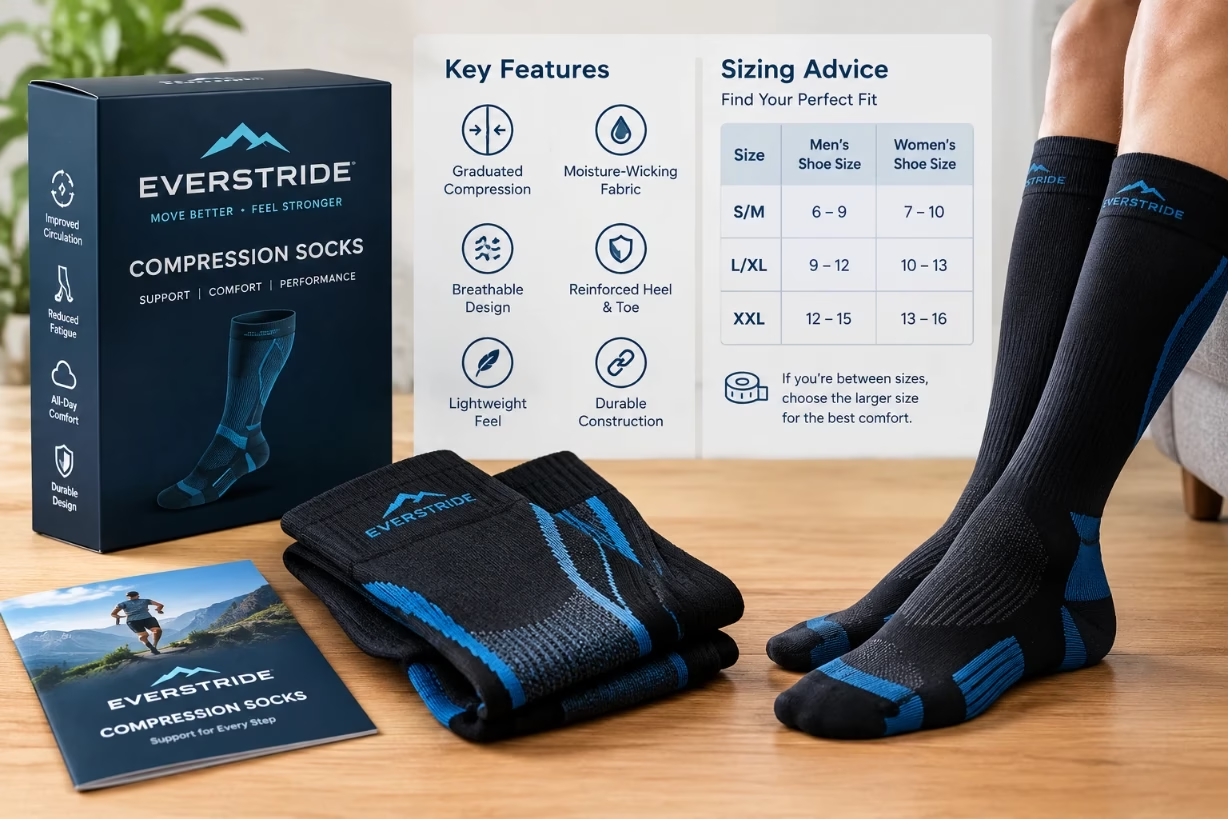
Everstride compression socks are wide-fit, bamboo-based support socks aimed at people with swelling, tired legs, and wider calves. In this review, I walk through real-world features, comfort, and detailed sizing advice so you can pick the right Everstride compression socks size the first time.
What Makes Everstride Compression Socks Different
When I first looked at everstride compression socks, what stood out was how openly they target people with wide calves, sore legs, and sensitive skin. A lot of brands say they fit “most,” but if you have bigger calves or swelling, “most” does not include you. Everstride leans into that gap with extra-wide designs, softer yarns, and more forgiving cuffs.
At a high level, everstride compression socks are built to:
- Give light to moderate graduated compression from ankle to below the knee
- Offer wider calf space than standard drugstore compression socks
- Use soft materials, especially bamboo blends, to cut down on itch and tight bands
- Support long wear times for workdays, travel, or standing jobs
That mix matters if you have tried “classic” medical socks that feel like wrestling a rubber band up your leg. Everstride compression socks aim to hit a middle ground: easier to get on, but still supportive enough to help swelling and fatigue.
Key Features Of Everstride Compression Socks
I will break down the main features of everstride compression socks in plain language, then share how those features feel in real daily use.
1. Extra-Wide Calf Fit
The first selling point is the wide calf design. Many people with larger legs or water retention say typical 15–20 mmHg socks leave deep marks or roll down. Everstride compression socks are cut with more room through the calf and a more generous opening at the top cuff.
In practical terms, this means:
You can usually pull them on without a struggle, even if your calves are thick, muscular, or swollen. The top band is less likely to dig in like a tight elastic, which matters if you bruise easily or have sensitive skin around the knee. The fabric tends to “hug” instead of bite, so you are more willing to wear them all day.
That wide fit is a big part of why everstride compression socks have become a go-to name in plus-size and lymphedema communities online. They are not perfect medical garments, but the comfort level is clearly higher than many generic brands.
2. Bamboo Blend Fabric
Most of the flagship Everstride lines are bamboo-based or bamboo-blend compression socks. Bamboo yarn has a couple of natural perks that show up right away when you slide them on.
First, bamboo feels soft and smooth, almost like a fine cotton with a bit of silk. If you hate scratchy synthetic fibers, this is a big plus. Second, bamboo tends to breathe better than pure nylon and can help wick sweat, which keeps your feet drier on hot days or long shifts.
Here is how that shows up in real life with everstride compression socks:
The socks feel cozy straight out of the package instead of stiff. Your legs stay reasonably cool, even under jeans or work pants. Odor control is a bit better than cheap polyester socks, especially if you rotate pairs and wash regularly.
For anyone wearing compression for long hours, that soft bamboo blend is one of the main reasons the socks feel less like medical gear and more like normal clothing.
3. Gentle Graduated Compression
Everstride compression socks usually sit in the light to moderate compression range (commonly around 15–20 mmHg, depending on style). Graduated compression means the squeeze is stronger at the ankle and slowly lighter as it moves up the calf.
If you deal with:
- End-of-day ankle swelling
- Heaviness or aching in your calves after standing
- Mild varicose veins or “tired” legs
- Travel swelling on flights or long drives
this level of compression is often enough to make a clear difference without feeling like a tight medical stocking. Most users describe everstride compression socks as supportive but wearable, even for 8–12 hours at a time.
4. Styles: Closed Toe, Toeless, And Ankle Options
Everstride has a few main product lines, and understanding them helps you match your needs:
Full-length bamboo compression socks reach up to just below the knee. These are the classic everstride compression socks for swelling, circulation, and long shifts. Good for general leg support and travel.
Toeless compression socks keep the calf and ankle supported but leave your toes free. This can help if you have bunions, hammer toes, toenail problems, or just hate the feeling of your toes being squeezed together. You can also inspect or bandage toes without taking the whole sock off.
Ankle compression socks focus on the foot and ankle area. They are useful if most of your swelling is around your ankles or if you want compression that works inside regular shoes and sneakers without going up the calf.
All of these are still “everstride compression socks,” just in different cuts and lengths, so the sizing logic is similar even though coverage changes.
5. Colors And Everyday Wearability
There are plenty of standard colors like black, navy, beige, and white, which slide under work clothes or uniforms without drawing attention. There are also brighter shades (like purple or fun patterns, depending on current stock) for people who want compression that does not look clinical.
I find this matters more than it sounds. When your compression socks look and feel like normal socks, you are much more likely to wear them daily instead of only when you “have to.” That consistency is what really helps swelling, pain, and circulation over weeks and months.
Comfort Review: How Everstride Compression Socks Feel Day To Day
Features on paper are one thing. What most people really want to know is: do everstride compression socks actually feel comfortable, and do they do anything noticeable?
Ease Of Putting Them On
If you have ever fought with stiff medical stockings, you know the dread of getting dressed. Compared with those, everstride compression socks are generally easier to slide on. The wide calf and softer fabric mean you can usually bunch them up and pull them over the heel without a long wrestling match.
That said, they still compress, so you will need two hands and a bit of technique. For anyone with limited hand strength or mobility, using a sock aid tool, rubber gloves for grip, or sitting while dressing can make a big difference.
All-Day Wear And Skin Feel
Most users describe everstride compression socks as soft and non-itchy. The bamboo blend has less of that shiny, squeaky nylon feel. When sized correctly:
The cuff should sit flat without rolling, your skin should not show sharp “rubber band” lines when you take them off, and the socks should not sag down your leg by midday.
If you are getting deep grooves or numbness, that is usually a sizing or length mismatch rather than a fabric problem. I will walk through sizing fixes in detail in a later section.
Support For Swelling And Fatigue
For light to moderate swelling, everstride compression socks can make a real daily difference. Many people report:
Less ankle puffiness by evening, fewer “heavy leg” feelings after long walks, shifts, or travel days, and some reduction in surface vein throbbing or aching.
If your swelling is severe, chronic, or linked to medical conditions like advanced lymphedema or heart failure, this off-the-shelf compression level may not be enough, and you should talk with a doctor or certified fitter. But for everyday tired legs, everstride compression socks land in a helpful sweet spot.
Detailed Sizing Advice For Everstride Compression Socks
Sizing is where many people either fall in love with everstride compression socks or feel frustrated. Getting the right size is less about your shoe size and more about your calf measurements and leg shape.
Step 1: Measure Your Calf Correctly
Do not guess. Grab a soft tape measure (the kind used for sewing) and write down two key numbers:
- Calf circumference at the widest point. Stand or sit with your leg slightly bent. Wrap the tape around the fullest part of your calf, usually mid-calf. Do not pull so tight that the tape digs in, but do not leave it hanging loose either.
- Ankle circumference at the narrowest point just above the ankle bone. This helps if you are between sizes or have a big size difference between ankle and calf.
Measure both legs if you have one leg more swollen than the other. Use the bigger measurements as your baseline for everstride compression socks.
Step 2: Compare With The Size Chart, Not Just Shoe Size
On the Everstride site, you will see a sizing chart that lists calf ranges for sizes like M, L, XL, 2XL, 3XL, sometimes even beyond. Shoe size is often listed, but calf circumference should be your main decision point.
Here is a simple way to think about it:
- If your calf is near the lower end of a range, that size will feel firmer, closer to the advertised compression level.
- If your calf is near the upper end of a range, that size will feel snug but may still work, especially if you like strong support.
- If your calf is slightly above the max for one size, consider the next size up in everstride compression socks, especially if you bruise easily or hate tight cuffs.
Because Everstride focuses on wider fits, many people find they can pick a size that hugs without biting, but you still need to respect the chart.
Step 3: Decide Based On Your Priority: Stronger Compression Or Comfort
With everstride compression socks, going down a size can give you stronger squeeze, and going up a size can give you a gentler, more comfortable hug. You do not want to go so small that you cut off circulation, or so big that the socks slide down.
Ask yourself:
Do you mainly want symptom relief for serious swelling? Then stay closer to the tighter end of your size range, as long as the socks are not painful. Do you mostly want mild support and comfort for work or travel? Then leaning slightly larger can keep everstride compression socks easy to wear daily.
Step 4: Pay Attention To Length
Another common fit issue with everstride compression socks is where the top band ends. If the sock is too long for your leg, the top cuff can sit at the back of your knee crease and dig in when you sit. If it is too short, it may fall mid-calf and roll.
To check length:
- Pull the sock on smoothly with no bunching.
- Stand up and see where the top edge hits. Ideally, you want it about two fingers below the crease at the back of your knee.
- If it always rolls, that is a clue the sock may be too long for your leg height or not the right match for your calf shape.
If you are shorter with very wide calves, you might consider the ankle or toeless versions of everstride compression socks to avoid that bunching at the knee while still getting support where you need it.
Step 5: What To Do If The Fit Is Off
Sometimes, even with careful measuring, the first pair of everstride compression socks does not feel quite right. Common complaints include:
The cuff digs in at the knee, the sock rolls down, the compression feels too light, or the fabric wrinkles at the ankle.
If compression feels too weak and you are near the low end of a size range, exchange for a smaller size. If the cuff digs in, especially if your calf is at the top of the range, size up. If the length is the issue, try a different style, like ankle or toeless everstride compression socks.
Because the brand designs specifically for wide legs, many people who struggled with other companies finally find a workable size here, but you may still need to adjust once.
Who Benefits Most From Everstride Compression Socks
Everstride compression socks are not a one-size answer for every medical condition, but there are certain groups of people who tend to be very happy with them.
People With Wide Calves Or Plus-Size Legs
If you have ever ripped a pair of standard compression socks, or you have a calf measurement that pushes beyond most charts, everstride compression socks deserve a close look. The wide fit, softer fabric, and higher size ranges are all designed with you in mind.
Workers On Their Feet All Day
Nurses, retail workers, warehouse workers, hairdressers, and anyone standing or walking most of the day can get a lot of mileage out of everstride compression socks. The goal is not perfect medical-grade compression, but practical, daily support that keeps legs from feeling like concrete by evening.
People With Mild Swelling, Varicose Veins, Or Tired Legs
If your doctor has suggested “support hose” but you are not yet in heavy-duty medical gear, everstride compression socks land in a friendly middle. They look more like everyday socks, which makes it easier to wear them without feeling self-conscious.
Travelers Concerned About Circulation
Long flights or drives can leave ankles swollen and legs sore. A pair of everstride compression socks in your carry-on is an easy upgrade. Put them on before boarding, walk the aisle when you can, and drink water. The supportive squeeze helps keep blood from pooling in your lower legs.
Simple Care Tips To Make Everstride Compression Socks Last
Compression socks do their job by holding their shape and stretch, so how you wash everstride compression socks matters.
For best results:
- Turn them inside out before washing.
- Use cool or warm water with mild detergent.
- Avoid bleach and fabric softener, which can break down elastic fibers.
- Air dry flat or hang them; avoid high heat dryers.
If you rotate several pairs and wash gently, everstride compression socks can keep their support for many months of regular wear.
Final Thoughts: Are Everstride Compression Socks Worth It?
Everstride compression socks sit in a sweet spot for many people. They are softer and more forgiving than many stiff medical stockings, but they still give real, noticeable support. The wide calf fit, bamboo fabric, and range of sizes and styles make them especially appealing if you have struggled to find socks that do not cut into your legs.
If you are dealing with moderate to severe medical issues, you should still talk with a healthcare provider or certified fitter. But for everyday swelling, travel, tired legs, or plus-size calves, everstride compression socks are a strong, people-friendly option that bridges comfort and function. With careful measuring and a bit of trial and error on size, you can usually land on a pair that you forget about in the best possible way, because your legs simply feel better by the end of the day.