
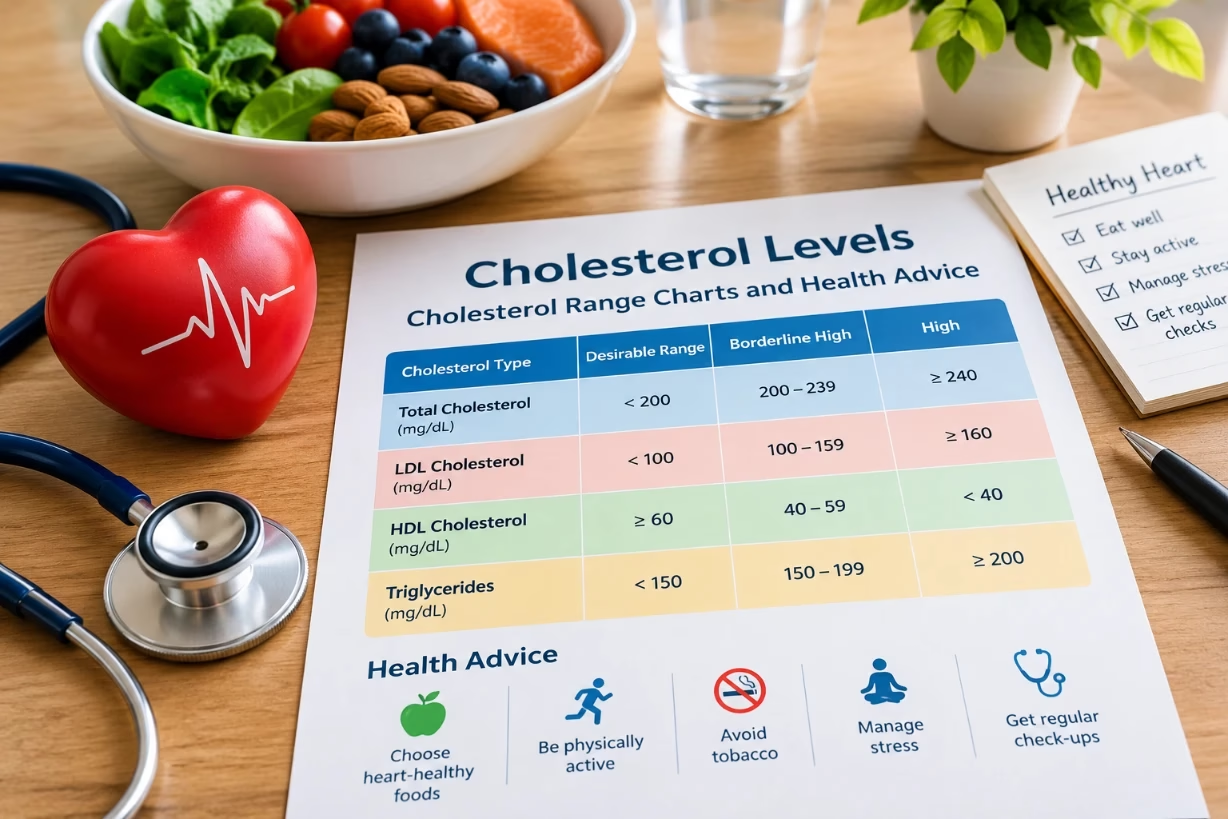
Healthy cholesterol level cholesterol ranges depend on age, sex, and heart risk, but most adults aim for total cholesterol under 200 mg/dL, LDL under 100 mg/dL, HDL above 50 mg/dL, and triglycerides under 150 mg/dL, along with lifestyle habits that protect the heart.
When I first started paying attention to my own cholesterol level cholesterol numbers, I honestly felt confused. My lab slip listed total cholesterol, HDL, LDL, non HDL, triglycerides, ratios, and a handful of “normal” ranges that did not feel clear at all. If you are staring at your own results and wondering what they really mean for your heart, you are not alone.
In this guide, I walk through cholesterol range charts in simple language so you can read your numbers with less stress and more confidence. I also share practical health advice that you can start using today, even if your cholesterol level cholesterol is far from perfect.
What Cholesterol Level Cholesterol Actually Measures
The word “cholesterol” gets thrown around a lot, but your blood test is measuring several different things. Cholesterol itself is a waxy, fat like substance that your body needs to build cells and make hormones. Your liver makes most of it, and you also take in some from food.
Your lab report usually includes these key parts of cholesterol level cholesterol:
Total cholesterol
This is the combined amount of cholesterol carried in all lipoproteins in your blood. It is a big picture number. For most adults, total cholesterol below 200 mg/dL is considered desirable. Higher than that suggests more risk, especially when LDL is also high.
LDL cholesterol (often called “bad” cholesterol)
LDL stands for low density lipoprotein. I think of LDL particles as trucks carrying cholesterol out through your bloodstream. When you have too many of these trucks, they can drop cholesterol into the walls of your arteries. Over time, this buildup can narrow blood vessels and raise your risk of heart attack and stroke.
HDL cholesterol (often called “good” cholesterol)
HDL stands for high density lipoprotein. If LDL trucks drop off cholesterol, HDL trucks help pick it up and carry it back to the liver. Higher HDL levels are linked with lower risk of heart disease, so most charts list a minimum goal, not a maximum limit.
Triglycerides
Triglycerides are a type of fat in your blood. Your body uses them for energy, but high levels can also damage arteries and increase heart risk. Triglycerides are often high in people with insulin resistance, prediabetes, type 2 diabetes, or heavy alcohol use.
Non HDL cholesterol
Some labs now highlight “non HDL” cholesterol, which is simply total cholesterol minus HDL. This includes LDL plus some other particles that can also cause plaque in arteries. Many heart doctors now pay close attention to this number because it can predict risk very well.
Standard Cholesterol Range Charts For Adults
Every lab may have slightly different reference ranges, but most follow the same basic chart. Here is a simple way to read a typical adult cholesterol level cholesterol report.
Total cholesterol range chart
For adults 20 years and older:
Desirable: under 200 mg/dL
Borderline high: 200 to 239 mg/dL
High: 240 mg/dL and above
If your total cholesterol is between 200 and 239, I treat that as a yellow light. It does not mean instant danger, but it does tell me to look very closely at LDL, HDL, and your personal risk factors like blood pressure, smoking, and family history.
LDL cholesterol range chart
For LDL, lower is almost always better, especially if you have other heart risks.
Optimal: under 100 mg/dL
Near optimal: 100 to 129 mg/dL
Borderline high: 130 to 159 mg/dL
High: 160 to 189 mg/dL
Very high: 190 mg/dL and above
If you have heart disease, diabetes, or a strong family history of early heart attack or stroke, your doctor may want your LDL even lower than 100. Some people at very high risk are given a goal under 70 mg/dL, and in certain cases under 55 mg/dL.
HDL cholesterol range chart
For HDL, think “higher is better” up to a point.
Low (higher risk):
Under 40 mg/dL for men
Under 50 mg/dL for women
Acceptable: 40 to 59 mg/dL
Protective (often called high): 60 mg/dL and above
If your HDL is low, your overall cholesterol level cholesterol pattern is usually more dangerous, even if your total cholesterol does not look terrible. Lifestyle steps like exercise, not smoking, and a healthier diet can help nudge HDL up over time.
Triglyceride range chart
For fasting triglycerides in adults:
Normal: under 150 mg/dL
Borderline high: 150 to 199 mg/dL
High: 200 to 499 mg/dL
Very high: 500 mg/dL and above
Very high triglycerides can also raise the risk of pancreatitis, which can be a medical emergency. If your triglycerides are above 500, that usually calls for prompt treatment and close follow up, not just a “wait and see” plan.
Age Based Cholesterol Level Cholesterol Charts
Cholesterol targets are not exactly the same at every age. As we get older, our risk for heart disease rises, so the cholesterol level cholesterol numbers matter more. Here is a general overview.
Children and teens (ages 2 to 19)
For healthy children and teens without strong family risk, many guidelines say:
Total cholesterol should be under 170 mg/dL.
LDL should be under 110 mg/dL.
If a child has very high cholesterol, especially if a parent or grandparent had a heart attack or stroke at a young age, doctors think about inherited conditions like familial hypercholesterolemia. In that case, the child may need earlier and more aggressive treatment.
Young adults (ages 20 to 39)
In younger adults, a high cholesterol level cholesterol might not cause problems right away, but it can set the stage for trouble in the 40s and 50s. The goal is to catch and correct problems early, before plaque builds in the arteries.
For many healthy adults in this age range, LDL under 100 mg/dL and total cholesterol under 200 mg/dL are still solid targets. Lifestyle changes often work very well at this stage.
Middle age and older adults (40 and up)
Once you reach 40, heart disease risk climbs, especially if you have high blood pressure, diabetes, or you smoke. Health professionals often use risk calculators that look at your age, sex, cholesterol level cholesterol numbers, blood pressure, smoking history, and sometimes other markers.
If your 10 year risk of heart attack or stroke is high, your LDL goal often becomes stricter. In many cases, medication like a statin gets added on top of diet and exercise.
How To Read Your Cholesterol Level Cholesterol Report Like A Pro
When I look at a cholesterol report, I do not stop at total cholesterol. Here is how I walk through the numbers in a simple way you can copy.
Step 1: Look at LDL first
LDL drives a lot of heart risk. If your LDL is above 130, that is a clear warning flag. If it is above 160, I consider that serious, especially if you have any other risk factors. If you already have heart disease, diabetes, or kidney disease, I want that LDL much lower than 100.
Step 2: Check HDL
If your HDL is low, even a “borderline” LDL may be more dangerous. Low HDL can show that your cholesterol level cholesterol pattern is tilted toward higher risk. Regular movement, better sleep, and dropping cigarettes all help HDL over time.
Step 3: Review triglycerides
High triglycerides often point toward problems with sugar and refined carbs in the diet, extra body weight, or heavy drinking. They may also tie into insulin resistance and metabolic syndrome. When triglycerides are very high, treatment usually needs to start soon, not later.
Step 4: Consider non HDL cholesterol
Non HDL is simply total cholesterol minus HDL. Many experts like it because it covers all the “bad” particles, not just LDL. For many healthy adults, a non HDL goal under 130 mg/dL is common. For people with higher risk, a target under 100 mg/dL or even lower is used.
Step 5: Put the numbers into your life context
Your cholesterol level cholesterol values never exist in a vacuum. Age, blood pressure, blood sugar, smoking, kidney function, and family history all shape your real world risk. Two people with the exact same LDL might need very different plans.
Main Causes Of Unhealthy Cholesterol Level Cholesterol Patterns
Most people want to know why their numbers look off in the first place. Usually, it is a mix of genes and lifestyle, not one single cause.
Genetics and family history
Some people are born with genes that make the liver churn out extra cholesterol or handle LDL poorly. Familial hypercholesterolemia is a strong example, where LDL can be sky high even in kids and fit adults. If close relatives had early heart attacks, your cholesterol targets may need to be stricter.
Food choices and eating patterns
Diets heavy in saturated fat, trans fat, and refined carbs tend to push LDL and triglycerides up. Foods that can work against your cholesterol level cholesterol health include:
- Fatty cuts of red meat and processed meats like sausage
- Butter, lard, and large amounts of full fat cheese
- Fried fast foods and baked goods with shortening
- Sugary drinks, candies, and pastries made with white flour
Body weight and belly fat
Extra weight, especially around the waist, can raise triglycerides, lower HDL, and nudge LDL in the wrong direction. Even a modest weight loss of 5 to 10 percent of your body weight can improve cholesterol level cholesterol markers.
Lack of physical activity
Being inactive over many years tends to lower HDL and raise LDL and triglycerides. On the other hand, regular walking, biking, or swimming helps HDL climb and supports better overall heart health.
Smoking and alcohol
Smoking damages blood vessel walls and worsens the effects of high LDL. Heavy alcohol use can sharply raise triglycerides and contribute to fatty liver disease, which then messes with cholesterol level cholesterol handling in the body.
Other medical conditions
Some conditions make cholesterol harder to manage, including diabetes, kidney disease, thyroid problems, and certain hormonal disorders. Some medications can also shift cholesterol levels, so it is always worth going over your full list of medicines with your doctor.
Practical Health Advice To Improve Cholesterol Level Cholesterol
If your numbers came back high, it can feel scary. I have seen many people bring cholesterol into safer ranges with steady changes. You do not need perfection overnight; you need direction and consistency.
1. Shift your plate toward heart protective foods
Instead of thinking only about what to avoid, I find it easier to focus on what to add. Foods that support healthy cholesterol level cholesterol include:
- Oats, barley, and other high fiber whole grains
- Beans, lentils, and chickpeas
- Fruits like apples, berries, oranges, and pears
- Vegetables of all colors, especially leafy greens
- Nuts and seeds like almonds, walnuts, chia, and flax
- Fatty fish such as salmon, sardines, trout, and mackerel
- Olive oil and avocado in place of butter or shortening
Soluble fiber, found in oats, beans, and many fruits, acts like a sponge in your gut. It grabs onto some cholesterol and helps carry it out of your body before it enters the bloodstream.
2. Cut back on the biggest troublemakers
You do not have to become perfect, but trimming common offenders goes a long way:
Swap fried foods for baked or grilled versions.
Limit processed meats like bacon, hot dogs, and sausage.
Use smaller amounts of cheese and cream, and choose low fat dairy more often.
Keep sugary sodas, energy drinks, and sweet tea as rare treats instead of daily habits.
3. Move your body most days of the week
You do not have to become a marathon runner to help your cholesterol level cholesterol profile. Aim for at least 150 minutes per week of moderate activity, such as brisk walking, cycling, or swimming. That breaks down to about 30 minutes, five days per week.
If you have not been active for a long time, start smaller. A 10 minute walk after meals is a gentle way to begin. Over time, your goal can grow as your stamina builds.
4. Aim for a healthier weight, gently
Crash diets usually backfire. Instead, focus on small changes you can live with long term. Losing even 10 to 20 pounds can raise HDL and lower LDL and triglycerides, which improves your overall cholesterol level cholesterol pattern.
5. Quit smoking if you smoke
Quitting smoking is one of the strongest gifts you can give your heart. Within a year, your risk of heart disease drops sharply. Your HDL often rises a bit, and your blood vessels start to function better. It is hard, but the payoff is huge.
6. Watch your alcohol intake
For some people, small amounts of alcohol might be safe, but heavy drinking often drives triglycerides higher. If your triglycerides are up, cutting back or stopping alcohol completely can make a real difference in your cholesterol level cholesterol numbers.
7. Take medication if your doctor recommends it
Lifestyle changes are powerful, but sometimes they are not enough on their own, especially if your LDL is very high or you already have heart disease. In that case, medicines like statins, ezetimibe, PCSK9 inhibitors, or others may be added.
Medication is not a personal failure. It is simply another tool to lower your long term risk. You can still work on food, movement, and habits while using medicine to help your cholesterol level cholesterol reach safer ranges.
How Fast Can Cholesterol Level Cholesterol Improve
People often hope for overnight success, but cholesterol usually changes over months, not days. With solid lifestyle changes, some improvements can show up in as little as 6 to 12 weeks. Big shifts in LDL from medication can appear within that same time window.
Usually, your health care provider will repeat fasting cholesterol tests every 3 to 12 months, depending on how high your starting numbers were and whether you are taking medication. This steady follow up shows what is working and what still needs attention.
When High Cholesterol Level Cholesterol Becomes An Emergency
Most of the time, high cholesterol is a slow moving problem. It builds risk over years. There are, however, a few situations that need urgent care.
If your triglycerides are over 500 mg/dL, and especially if they are over 1000 mg/dL, your doctor may worry about pancreatitis. If you have severe belly pain, nausea, vomiting, or fever along with very high triglycerides, that calls for emergency evaluation.
If you already have severe chest pain, sudden shortness of breath, or signs of a stroke, do not wait on a cholesterol test. Call emergency services right away. Cholesterol level cholesterol treatment aims to lower the chances of those events in the first place, but once they start, minutes matter.
Questions To Ask Your Doctor About Your Cholesterol
Many people leave the clinic with more confusion than clarity. I like going into appointments with a short list of questions. You might ask:
- What is my LDL goal based on my risk factors?
- How does my HDL affect my overall risk?
- Are my triglycerides a concern right now?
- What lifestyle change would give me the biggest benefit first?
- Do I need medication for my cholesterol level cholesterol, and why?
- When should I have my cholesterol tested again?
Taking notes during the visit or asking for a written summary helps you remember the plan once you get home.
Living With Cholesterol Level Cholesterol For The Long Term
Cholesterol is not a one time project. It is more like caring for a garden. You plant good habits, pull out some weeds, and keep checking in over time. Some seasons will be easier than others.
I have watched many people go from feeling scared and lost about their cholesterol level cholesterol to feeling informed and calmer. The shift often happens once they understand their numbers, have a realistic plan, and see that progress does not require perfection. Every better choice you make, even small ones, tilts the odds in favor of your heart.
If your latest test looked rough, do not use it as a reason to give up. Use it as solid information that helps you choose your next step. Bit by bit, you can move your cholesterol level cholesterol into safer territory and lower your risk of heart disease, stroke, and other problems that steal years of life and energy.