
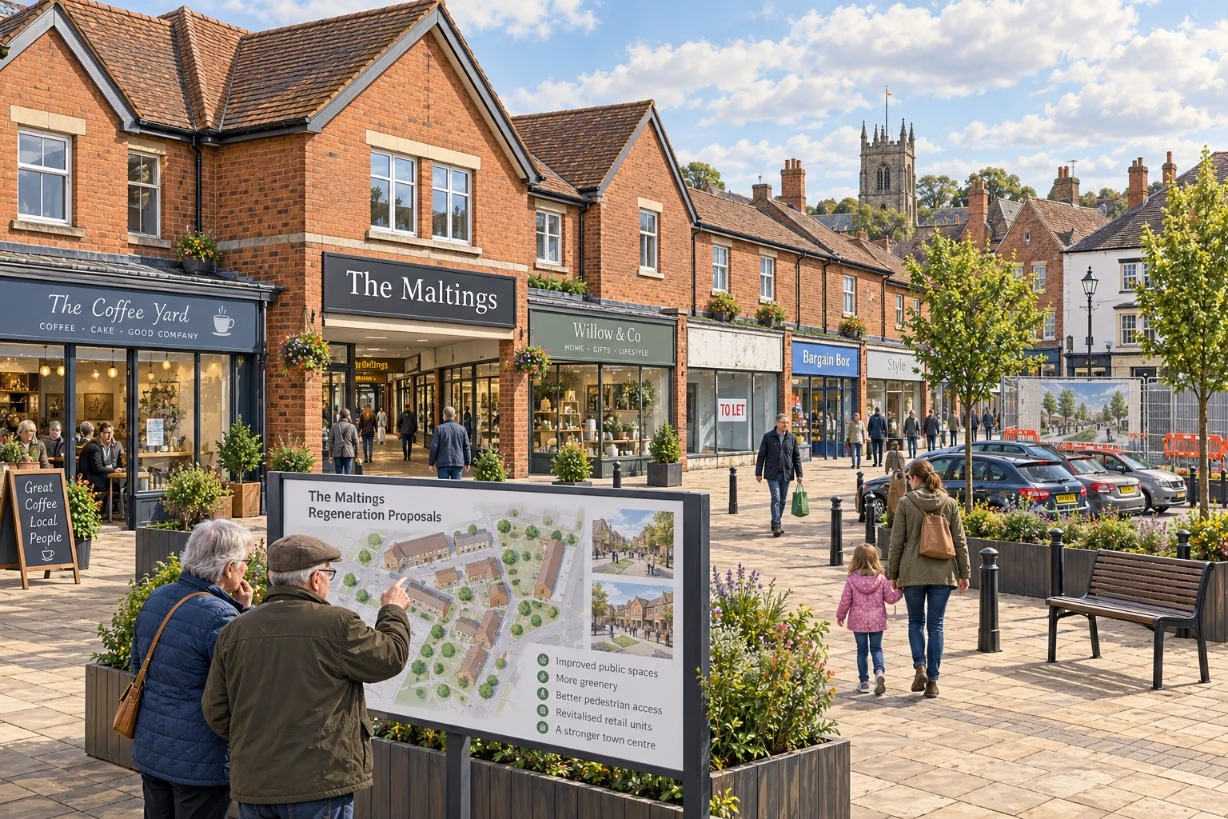
The Maltings Uttoxeter regeneration is moving from years of planning into real on site change, with partial demolition, public realm upgrades, new public toilets and Changing Places facilities, EV charging, and long term mixed use redevelopment that aims to give the town center a stronger, greener future.
The Maltings Uttoxeter regeneration scheme at a glance
When I talk about the maltings uttoxeter regeneration, I am really talking about more than one project. It is a mix of planning policy, design work, transport strategy, and now live construction activity centered on The Maltings shopping precinct, the big town center car park, and the streets that connect them to the Market Place, Bridge Street, Trinity Square, the bus station, and the train station.
Over the last few years, East Staffordshire Borough Council, Uttoxeter Town Council, Staffordshire County Council, and consultants like AECOM have all had a hand in shaping a masterplan for this part of town. That masterplan sets out a vision for a greener, better connected, more attractive town core, with:
- Partial demolition and refurbishment of The Maltings shopping center, not a complete knock down and start again.
- New public realm and landscaping, including trees, planting, and better paving.
- Electric vehicle charging and solar canopies on the car park.
- Improved toilets and a modern Changing Places facility near the bus station.
- Safer walking and cycling links as part of a wider town center transport package.
Planning approvals granted in 2025 for partial demolition and refurbishment, along with a series of transport and design documents since 2020, show that the maltings uttoxeter regeneration is no longer just a concept on a page. It is now the agreed direction of travel for the heart of the town.
Why The Maltings needed regeneration in the first place
If you have ever parked at The Maltings on a rainy Saturday and rushed across that open expanse of tarmac to the shops, you probably understand why people in Uttoxeter have been talking about change for years. The precinct and car park sit on land that once formed part of the old brewery complex, and when the Maltings shopping area first appeared it felt modern and practical. Over time though, it began to feel tired and underused.
From the Borough Council’s point of view, the site was too valuable to stay as a mostly flat car park with a run of dated retail units around the edge. The Local Plan flags The Maltings as a strategic regeneration site, and more recent masterplan work pulls it together with Trinity Square and the wider Conservation Area. That is where the maltings uttoxeter regeneration starts: with the simple idea that a central site should do more than store cars.
There has also been a wider push to support Staffordshire’s market towns, not just the big centers. Uttoxeter shows up in county-wide strategies as a place where investment in walking, cycling, buses, and town center design can shift short car trips to more sustainable choices. Since most car journeys into the town center are only one or two kilometers, improving the layout and feel of the Maltings area fits neatly with that transport goal.
Key strands of the Maltings scheme so far
When people ask me what is actually happening on the ground, I usually break the maltings uttoxeter regeneration into a few clear strands: buildings, public realm, accessibility, transport, and energy. Each has its own projects and timelines, but they all feed into one picture.
1. Partial demolition and refurbishment of The Maltings shopping center
A major planning decision in 2026 confirmed partial demolition of The Maltings shopping center, along with refurbishment of remaining units and new hard and soft landscaping. That tells us something important. The town is not losing every familiar building on the site. Instead, the scheme picks out weaker or obsolete structures while keeping and upgrading better ones.
In practice, that means:
- Some existing units are removed to open up lighter, safer routes across the site.
- Retail frontages that stay are due for a facelift, with updated shopfronts and better access.
- Service yards and backs of shops can be tidied up and screened by new planting or walls.
I like this approach because it respects the fact that people still use The Maltings today. It avoids the “dead hole in the middle of town” problem that can follow a full clearance, while still making space for a new layout.
2. Public realm and landscaping changes
The public realm plans around The Maltings are more than just nicer paving. The masterplan and transport strategies talk about creating a continuous, human scale route from the station and Racecourse side of town, across to The Maltings, and up to the historic Market Place. That means:
New or upgraded paths that feel obvious for pedestrians, with clear lines of sight and better lighting at night. Seating areas that give people a reason to pause, talk, and spend time in town instead of just rushing back to their car. Planting that softens what is now a very hard, exposed car park, so it feels cooler in summer and less bleak in winter.
In simple terms, the maltings uttoxeter regeneration is trying to turn a car dominated gap into a proper town space where walking, socializing, and small events feel natural.
3. Accessibility, toilets, and Changing Places facilities
One of the most human, day to day parts of the project is the plan for new public toilets and a Changing Places facility near the bus station. Local councillors have already talked about this as part of the first phase of works. Refurbishment of older toilets on Bradley Street ties in, but the standout piece is a modern standalone Changing Places unit right by the main bus hub.
That matters more than it might sound. For people with complex mobility or care needs, access to a full Changing Places facility can decide whether a trip into Uttoxeter town center is possible at all. Placing it in the Maltings area, near the bus station and close to the main shops, strengthens the argument that the maltings uttoxeter regeneration is not just about buildings but about inclusion and dignity.
4. EV charging and low carbon infrastructure
Another visible early project has been the installation of EV charging at The Maltings car park. The council partnered with a specialist provider to deliver what they call a FastHub, combining multiple charge points with solar generation on a canopy structure.
For drivers, this is straightforward. You can park, plug in, and walk to the shops. But at a town level, this is a signal about where things are heading. The Maltings site is being set up as a greener transport hub, supporting electric cars while the wider strategy tries to shift more short trips to walking, cycling, and buses.
From a regeneration point of view, it is a neat example of the maltings uttoxeter regeneration serving several goals at once: supporting new technology, cutting emissions, and drawing people into the town center for longer visits while they charge.
How the masterplan shapes future phases
To really see where things might go, you have to look beyond the individual projects and back at the masterplan for The Maltings and Trinity Square. This document sets out a “best case” vision rather than a fixed blueprint, but it guides every planning decision and funding bid tied to the area.
Key ideas in that vision include:
Better links between character areas. The plan calls the town center a single character area, pulling The Maltings, Market Place, Bridge Street, Trinity Square, and the station into one system. So future projects are judged on whether they join up or fragment that system.
Priority for walking and cycling on short trips. With so many car journeys into town being under two kilometers, the long term goal is to make walking or cycling feel just as easy, if not easier. That means safe crossings, clear signage, secure cycle parking, and well designed pavements through and around The Maltings site.
Opportunities for town center living. While the current permission deals mainly with partial demolition and refurbishment for retail and public realm, the broader maltings uttoxeter regeneration conversation still includes future housing options. Higher quality flats or townhouses close to services can help keep the center busy into the evening, which in turn supports cafes and small shops.
Resilience against flooding and climate stress. With Picknall Brook and other water features nearby, earlier work around Uttoxeter has looked at re naturalizing channels and adding green space. Any deeper redevelopment at The Maltings will have to work in step with those ideas, adding trees, planting, and sustainable drainage to soak up heavy rain.
Where things stand now and what is coming next
Right now, the maltings uttoxeter regeneration sits in a middle stage that can feel slow from the outside. Big decisions like the 2026 planning approval for partial demolition have been made. Early works such as EV charging and planning for new toilets are either in place or in the near pipeline. But some of the more dramatic changes that people picture when they hear “regeneration” are still on the horizon.
Over the next few years, I expect to see:
On site works to remove agreed sections of the shopping center, followed by refurbishment of remaining units and new paving, lighting, and planting. Delivery of the new Changing Places facility and upgraded toilets, which will make a visible difference to everyday visitors. Progressive tweaks to traffic flow, signage, and crossings around the site as the town center transport strategy feeds into practical projects.
On the softer side, councils will push to bring in or support businesses that fit the new layout. That might include food and drink, health services, independent shops, or flexible workspaces. The key will be to keep a balance between local character and the pull of familiar high street names.
What success would look like for residents and visitors
For all the policy language and planning codes wrapped around the maltings uttoxeter regeneration, success will be judged in simple, human terms. When I picture a positive outcome, I do not think about floor space numbers first. I think about how a Saturday morning or a weekday lunchtime might feel different.
You park or step off the bus and the first thing you notice is that the space feels cared for. There are trees, planters, and places to sit that are not just concrete blocks. Walking routes are clear, direct, and well lit, with level surfaces that work for wheelchairs, strollers, and older people.
Shops that remain in The Maltings look fresher and more open to the walkway. If a few have changed hands, they are trading in a space that feels more like a small town square than the back of a car park. When you need the toilet, you know exactly where to go, and if someone in your group needs a Changing Places facility, it is right there by the bus station, not a stressful car ride away.
On top of that, electric vehicles are quietly charging under solar canopies, bikes are safely locked up, and you can cross from the station side of town to the Market Place without weaving through parked cars. If the maltings uttoxeter regeneration can deliver that kind of everyday ease, most people will not care which policy document first proposed it.
How local people can stay involved
One of the interesting parts of this story has been how many rounds of public input have already happened. From concept designs for The Maltings in 2023 to the neighbourhood masterplan workshops in 2024, residents and businesses have shaped key choices, such as how much parking to keep and where new links should run.
Going forward, I would keep an eye on a few channels if you care about how the maltings uttoxeter regeneration plays out:
- Consultation pages and news updates on the East Staffordshire Borough Council website.
- Uttoxeter Town Council meeting minutes, which often flag practical issues like toilets, access, and small site works.
- County level transport strategy reports that touch on walking, cycling, and buses in and out of the town center.
When new planning applications come forward for later phases, there will usually be a window to comment. That is the time to raise detailed points about design, accessibility, noise, or trading impacts. Thoughtful, specific feedback tends to carry more weight than general support or objection.
Balancing heritage, character, and modern needs
One challenge that sits in the background of the maltings uttoxeter regeneration is heritage. Parts of the site fall within the Conservation Area, and the town has a strong sense of its brewing and market history. At the same time, modern retail, digital life, and climate pressures pull the town in new directions.
The masterplan tries to walk a narrow line. It does not aim to fossilize everything in a heritage theme park, nor to sweep away recognisable buildings for bland boxes. Instead, it looks for ways to frame the older streets and squares with new spaces that feel contemporary but sympathetic in scale and material.
That might mean using brick and stone detailing that echo traditional forms without copying them. It might mean keeping view lines to church towers and historic facades, even as new walkways cut across old service yards. The important thing, in my view, is that the maltings uttoxeter regeneration leaves the town feeling more like itself, not less.
Final thoughts on the Maltings future plans
Standing back from the detail, I see the maltings uttoxeter regeneration as a long, sometimes messy process of making a town center fit for the next few decades. There will be frustrations along the way. Schemes of this kind often move slower than residents would like, and not every idea from early concept drawings will survive contact with budgets and market reality.
Even so, the direction is clear. The Maltings is shifting from a car heavy, slightly worn precinct into a more mixed, walkable, greener space with better facilities for all kinds of visitors. Future phases can add more homes, more varied businesses, and even richer public realm. If the teams behind it keep listening, keep sharing clear information, and keep their eyes on the human experience of everyday users, the site can become a quiet success story in Staffordshire’s wider program of town center renewal.