
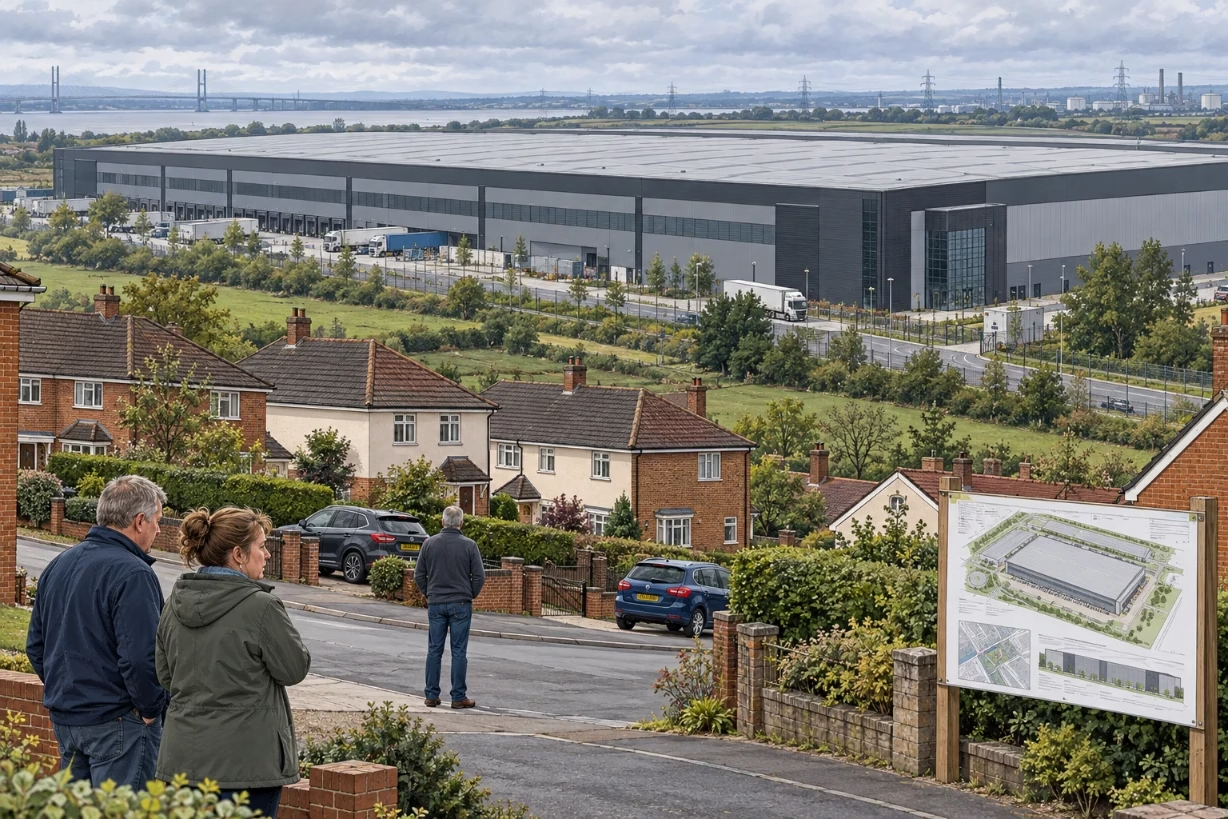
The Pilning warehouse planning dispute centers on a massive new warehouse in Pilning, South Gloucestershire, approved under a 1957 planning consent. The council’s decision has sparked anger over visual impact, noise, traffic, house price losses, and how little power modern residents seem to have over decades‑old permissions.
I want to walk you through what really sits behind the Pilning warehouse planning dispute, how the council decision happened, and what impact this has on local people and planning law more widely. If you have seen photos of the new warehouse looming over back gardens, you already know this is not just a dry planning case. It is a story about power, trust, and what happens when old industrial consents collide with modern village life.
What Actually Happened In The Pilning Warehouse Planning Dispute
The heart of the Pilning warehouse planning dispute is simple but painful. A huge warehouse appeared near homes in Pilning, close to the Severnside industrial area in South Gloucestershire. Residents assumed something this large would go through a full modern planning application with full consultation, transport studies, and environmental checks. Instead, most of the key questions were treated as already settled, because of a planning consent first granted in 1957.
Back in the 1950s, the Severnside area was earmarked for heavy industry. An interim development order allowed large-scale industrial and warehouse use across a vast area of land. That old permission, never revoked, sat in the background for decades. Developers later realized they could rely on that historic consent to build modern logistics sheds on a huge scale, with the council mainly checking layout and appearance rather than the basic principle of development.
For homeowners, that discovery landed like a punch. They saw a building as tall as several houses stacked on top of each other go up behind their gardens. Many say estate agents have told them their homes have lost tens of thousands of pounds in value. From their point of view, the Pilning warehouse planning dispute shows how a paper consent from a very different era can still shape their lives, without them ever having a real say.
How The Council Ended Up Approving The Warehouse
To understand the council decision, you have to step into the shoes of planning officers and look at the legal box they were working inside.
By the time the recent developer applied to the council, the main use of the site as industrial or warehouse space was already considered lawful under the 1957 consent. The new application was not asking “can we put warehouses here” in the usual way. It was basically saying, “here is how we plan to design and arrange the buildings that the old interim order already allows.”
That meant the council had a narrow job. They could look at:
- Detailed layout on the plot
- Building design and materials
- Landscaping, boundaries, and lighting
- Conditions to control noise, hours of operation, or traffic routing, if they felt able
They could not easily say no to the overall warehouse development without risking a legal challenge, because the basic industrial use of the land was locked in by the old consent. If they tried to refuse, the developer could appeal, and an inspector might overturn that refusal and even award costs against the council.
So the council issued its decision: permission granted for the detailed scheme, framed as a reserved matters or related approval. From a legal point of view, officers could argue their hands were tied. From a human point of view, people in Pilning looked at the size of the warehouse and felt the council had abandoned them.
Why A 1957 Consent Still Matters In 2026
The Pilning warehouse planning dispute has shone a bright light on a little-known corner of planning law: historic interim development orders and other old consents that were carried over when Britain’s modern planning system took shape.
Those consents can be extremely broad. In Pilning, the 1957 permission covered a huge area of land for industrial and storage uses, without the detailed limits that modern consents carry. There were no strict caps on building heights, no transport assessments, no ecological surveys, and no neighborhood engagement like most people expect now.
Because the consent has never been revoked, it still has legal force. As long as the developer can show that the new warehouse falls within the broad description and that any key conditions are met, they can usually rely on that old permission. That is why residents keep hearing the same frustrating phrase: “our hands are tied.”
In Parliament, their MP has already used Pilning as a clear example of why these mid‑20th century consents cause trouble. The issue is bigger than just one village. Across England and Wales, there are other areas where old permissions sit in the background, ready to support modern logistics hubs, data centers, or industrial sheds that no one in the current community ever agreed to.
Human Impact: House Prices, Wellbeing, And Sense Of Place
It is easy to talk about “visual impact” or “amenity loss” as planning jargon. But the real effects of the Pilning warehouse planning dispute are far more personal.
Homeowners report estimated price drops of around fifty thousand pounds or more, simply because their view of fields or open sky has turned into a blank wall of cladding and constant truck movement. For many, that is their main life savings, gone on paper in a single build season.
Daily life has changed too. People describe:
- Noise from reversing alarms and loading during long hours
- New traffic patterns as HGVs use local roads as cut‑throughs
- Bright security and yard lighting spilling into bedrooms at night
- A constant sense of being overlooked by a building that dwarfs their homes
I have read stories of residents who no longer sit in their own gardens because the scale of the warehouse feels oppressive. Others say buyers have pulled out of sales once they see the structure from the back lane. Even if some of those stories involve emotion and fear as much as hard numbers, the overall pattern is clear: the Pilning warehouse planning dispute has damaged trust, wellbeing, and the feel of the village.
How Local Campaigners Responded To The Council Decision
The warehouse did not go up quietly. The Pilning warehouse planning dispute sparked petitions, local action groups, and questions in both the council chamber and Westminster.
Residents and supporters came together under banners such as Severnside Warehouse Action or similar community groups. They collected signatures, spoke to the media, and pushed their local MP to raise the issue nationally. Their goals were not only about this single building, but about stopping more massive sheds from following the same route.
Campaigners have pressed for several key changes:
First, they want the 1957 consent either revoked or formally limited. That would mean any new large warehouse proposal would have to go through a full, modern planning application process, open to proper objections and full environmental scrutiny.
Second, they want the council and government to recognize the unfairness of allowing modern mega‑warehouses to be judged against standards written long before people worried about climate, air quality, HGV volumes, or the mental health impact of losing long‑loved views.
Third, they want stronger guidance so that other communities are not blind‑sided by similar old‑consent developments. News stories about Corby and other towns dealing with sudden giant sheds show Pilning is not alone. The same pattern keeps repeating: old paper consent, shocked residents, a council that says it has no real choice.
Key Planning Law Issues Exposed By The Dispute
If you look at the Pilning warehouse planning dispute with a planner’s eye, three main issues jump out.
1. Historic Consents And Democratic Deficit
Most people assume that big developments near their homes will always follow the current local plan, with full consultation. Historic consents break that link. They were issued in a time when local voices were weaker, environmental law was thin, and traffic volumes were lower. Yet they can still decide what gets built now.
This creates what many call a democratic deficit. Families buying homes in Pilning decades later had no real way of knowing that such a broad industrial consent still covered the land next door. Yes, a determined lawyer or planning consultant might have spotted clues in the records, but that is not realistic for most ordinary buyers.
2. Limits Of Council Powers Once A Consent Exists
Councils do have the power, in theory, to revoke or modify existing planning permissions. But those powers are rarely used, because revocation normally requires compensation to the landowner or developer for lost value. When land is earmarked for high‑value logistics parks, that compensation bill can be eye‑watering.
So councils tend to live with old consents, even when they know those consents are out of step with modern policy. That is part of why the Pilning warehouse planning dispute has gained national attention. It highlights how hard it is, under current law, for a council to protect residents once a broad historic consent is on the books.
3. Conditions, Mitigation, And Their Limits
In Pilning, the council did try to use planning conditions to shape the development: landscaping strips, bunds, noise controls, HGV routing plans, and limits on lighting can all soften impacts. But conditions can only go so far when the basic form of development is fixed by a decades‑old permission.
Residents often feel these mitigations are a sticking plaster on a much deeper wound. They might reduce a certain number of decibels or shield part of the view, but they do not answer the deeper question: should a structure of this bulk sit so close to established homes at all? The Pilning warehouse planning dispute shows that once the principle is locked in, detailed conditions can only partly close the gap between law and local feeling.
Wider Policy Debate: Could The Law Be Changed?
The outrage around Pilning has already fed into a wider political debate about “historical interim development orders” and similar legacy consents. MPs have pressed ministers to look again at:
Whether councils should be given clearer, cheaper ways to review and, if needed, cancel or narrow very old industrial consents that cover wide areas near homes.
How communities are told about historic consents when they move into an area. Some argue for clearer flags in local search reports or an accessible national map of sites where these old powers still apply.
Whether new national guidance should spell out how far councils must go to test environmental and traffic impacts, even when a developer is relying on a historic permission rather than seeking fully fresh consent.
The Pilning warehouse planning dispute has become a kind of test case in the public eye. If nothing changes, residents fear more villages will find themselves living in the shadow of sheds they never agreed to. If the law is updated, Pilning may one day be remembered as the village that forced the system to confront its own past.
Practical Lessons For Other Communities Facing Similar Warehouses
If you live near industrial land and worry the same thing could happen where you are, the Pilning warehouse planning dispute offers some hard‑won lessons.
Check The Planning History Early
When a new warehouse is proposed, do not just read the recent application. Look for any references to old consents or interim orders. Ask the council’s planning department directly whether there is a historic permission being used. If you can, speak with a planning consultant who understands how these old documents work.
Focus Objections On What Can Still Be Changed
If the basic use is already lawful under an old consent, you may not be able to argue “no warehouse at all” and get far. Instead, focus objections and comments on details the council can still shape, such as:
- Building height, bulk, and distance from homes
- Landscaping buffers, bunds, and screen planting
- Traffic routing, hours of operation, and loading bay positions
- Noise barriers, acoustic fencing, and limits on night work
- Shielding and dimming of external lighting
In the Pilning warehouse planning dispute, many people say they would still dislike the warehouse even with better design. But small wins can still protect sleep, safety, and quality of life if you argue the right points at the right time.
Use Political Channels As Well As Formal Planning Routes
Formal objections on the planning portal are vital, but they are not the only tool. Pilning residents pushed their councilors, joined parish and local meetings, and worked with their MP. Raising the case in Parliament did not stop the first warehouse, but it put pressure on government to look again at historic consents.
If you face a similar fight, consider:
- Contacting your ward councilors with clear, calm evidence
- Speaking at planning committee meetings if public speaking slots are available
- Working with local journalists to show the human side of the story
- Petitioning both the council and Parliament to review underlying consents
Long‑Term Impact On Planning Culture In Pilning
Even if no more huge sheds are ever built as close to homes as this one, the Pilning warehouse planning dispute has already changed the planning culture around Severnside.
Residents are now far more alert to planning notices, weekly lists of applications, and council consultations. Local groups track warehouse schemes across the whole logistics park, not just the one behind their own fence. Parish and district councilors know that any mention of a “historic permission” will be watched closely and questioned hard.
At the same time, developers and planning officers are more aware of the reputational cost of relying heavily on old consents without serious modern engagement. Even when the law allows a relatively narrow decision, the public expects broader conversations about climate, design, and fair treatment of neighbors.
In that sense, the Pilning warehouse planning dispute cuts both ways. It has made some locals deeply cynical about the system. But it has also forced everyone involved to see just how high the stakes can be when law, land, and everyday lives collide.
What The Future Might Hold For The Pilning Site
Looking ahead, several paths are possible, and they are not mutually exclusive.
There could be further legal work or lobbying to limit how far the 1957 consent can be used for additional warehouses close to homes. That might involve negotiations between the council, landowners, and central government about revocation, variation, or new planning policy that layers tighter controls on top of the old base consent.
There could also be pushback through new planning applications on the same site. For example, if the developer later seeks to extend the building, add new access roads, or change its use in ways that go beyond the original permission, those steps might trigger fuller scrutiny. Locals will likely be ready to spot and challenge any move they see as creeping expansion.
Finally, there is the slower cultural and political shift. Every time an MP mentions the Pilning warehouse planning dispute in debates or committees, it keeps the issue on the radar of ministers and officials. Over time, that can turn into new guidance, updated legislation, or specific case reviews. None of that will shrink the existing warehouse, but it could stop other villages from waking up to the same shock.
Closing Thoughts: Why This Dispute Matters Beyond Pilning
I see the Pilning warehouse planning dispute as more than a local row. It is a sharp reminder that planning is not just about maps and legal tests. It is about how people experience their homes, their skylines, and their sense of belonging.
When a council decision leans on a 1957 consent to justify a twenty‑first‑century mega‑shed at the edge of a village, something in the balance between past and present feels off. Law may say one thing, but fairness, climate goals, and modern expectations say another. Bridging that gap is the real challenge revealed by Pilning.
Whether you live in South Gloucestershire or hundreds of miles away, the questions raised here are the same ones your community might face one day. Who gets to decide what can be built near your home? How far back in time should those decisions reach? And how can planning systems respect both legal certainty and living, breathing neighborhoods?
The Pilning warehouse planning dispute does not offer easy answers. But by paying close attention to its council decisions and community impact, other places can learn, prepare, and, hopefully, avoid some of the deepest scars that Pilning’s residents now carry.