
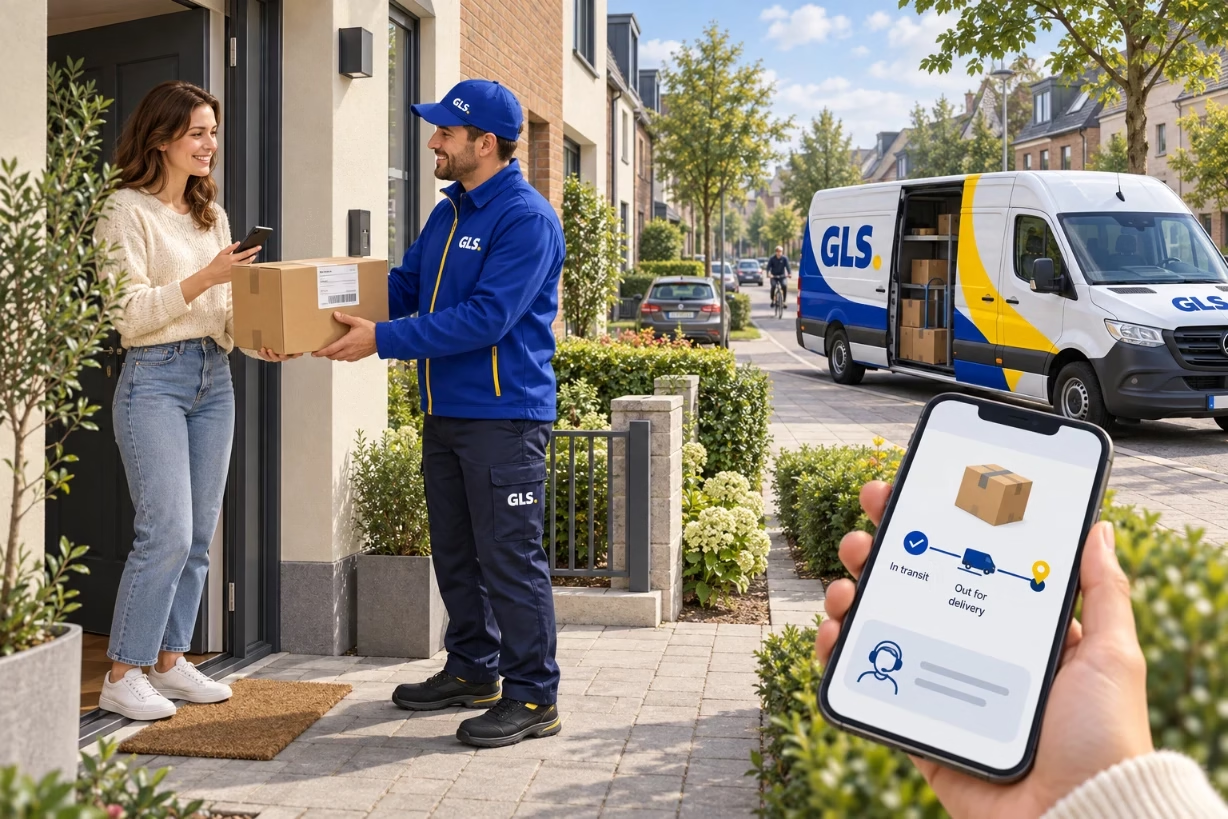
General Logistic Systems tracking lets you check parcel status in real time, see where your package is on its route, and get delivery help if something goes wrong. You can use the GLS website, tracking apps, and support options to solve delays, missed deliveries, or lost parcels quickly.
What General Logistic Systems Tracking Actually Does For You
When you see the phrase general logistic systems tracking, you are really talking about how a shipping company lets you follow your parcel from the moment it is picked up until it reaches the final door. I like to think of it as a live story of your package. Each scan, each location update, and each delivery attempt is one more line in that story. If you know how to read that story, you can solve problems faster, avoid stress, and plan your day around deliveries instead of guessing.
General logistic systems tracking usually ties together a few things behind the scenes: barcode scans at sorting centers, driver handheld devices, GPS data, customs systems, and customer support tools. On the surface you only see a simple tracking page, but underneath there is a chain of events that explains exactly what is happening to your parcel.
How General Logistic Systems Tracking Works Step By Step
To use general logistic systems tracking the right way, it helps to know what happens to your parcel on its journey. Even if you never see the warehouse or the truck, each step leaves clues in your tracking details.
1. Label creation and first scan
Everything begins when the sender creates a shipping label. That label has a unique tracking number and a barcode. The first time your parcel is scanned, the system usually shows a status like “Shipment data received,” “Label created,” or “Shipment picked up.” From here on, general logistic systems tracking will log every important move.
2. Local pickup and first depot
After pickup, the parcel goes to a local depot or branch. There it is sorted with other parcels going in a similar direction. You might see statuses like “Arrived at origin facility” or “Processing at local depot.” If the parcel sits there longer than a day or two without a new scan, that is one of the first signs that you might need delivery help or to contact support.
3. National or international transit
Next the parcel moves across regions or borders. Trucks, planes, and sometimes rail are involved. In general logistic systems tracking, this stage often shows updates such as “In transit,” “Departed hub,” or “Arrived at sorting center.” International parcels may pass through more than one main hub, so you can see a chain of cities and dates as the parcel moves closer to you.
4. Customs checks for cross border parcels
If your shipment crosses borders, customs can show up in the tracking status. You might see “Customs clearance in progress” or “Released from customs.” When customs holds a shipment, the tracking may not change for a few days. This delay is normal, but if customs asks for documents or payment, you or the receiver might need to act. General logistic systems tracking can give the reference numbers you must share with customs or the shipper.
5. Out for delivery with the local driver
When your parcel reaches the final depot near you, the most exciting line appears: “Out for delivery.” At this stage, the parcel is on a vehicle with a driver. Modern general logistic systems tracking may even show an estimated delivery window, such as between 2 and 6 PM, or a live map in some regions. If the status stays “Out for delivery” all day and then changes to something else without a delivery, that is when you start looking at delivery help options.
6. Delivered or delivery attempt
The last step is either “Delivered” or “Delivery attempt.” A proper delivery scan may include time, date, and sometimes a short note like “Left at front door,” “Handed to neighbor,” or “Signed by [name].” If you never got the parcel but the status says “Delivered,” that is your sign to start a trace request with the carrier or seller using the information shown in general logistic systems tracking.
Common General Logistic Systems Tracking Statuses And What They Mean
Many people feel confused when they read tracking pages full of short technical phrases. I want to break down the most common ones you may see with general logistic systems tracking, and what they usually mean in plain language.
Shipment data received
This often means the carrier got the shipping data from the seller, but the parcel may not be in their hands yet. If your parcel stays stuck on this status for more than 2 or 3 business days, it can mean the sender created the label but has not handed over the package, or the first scan failed.
Picked up or accepted
Now the parcel is physically with the carrier. From this point on, general logistic systems tracking should update more often as it moves through different buildings.
In transit
This is a broad term. It can mean the parcel is on a truck between depots, in a sorting center getting processed, or waiting to be loaded. If you see “In transit” in the same place for several days, there might be a backlog, a weather issue, or sometimes the scan did not upload correctly.
Out for delivery
This means your parcel is planned for delivery today with a driver. Most of the time, you should expect it during local business hours. If nobody shows up but the status later changes to “Delivery attempt” or “Consignee not available,” general logistic systems tracking becomes your proof when you talk to support about what happened.
Delivery attempted or consignee not available
This status shows the driver tried to deliver but could not finish the handover. Maybe nobody was home, the building was locked, the address was wrong, or there was no safe place to leave the parcel. Usually the tracking details will show what happens next such as another attempt or drop off at a pickup point.
Delivered
When you see “Delivered,” the system believes the story is over. The driver scanned the parcel as finished. If you cannot find it, read every line under that status. General logistic systems tracking may include extra hints like where it was left or who signed for it. That detail matters when you speak to neighbors or your building manager.
How To Use General Logistic Systems Tracking Step By Step
Many users only enter a number, glance at one line, and close the page. I like to take a more active approach. Here is how I use general logistic systems tracking to stay ahead of problems.
1. Keep the tracking number in one safe place
Right after you get the tracking number from a seller or shipper, save it where you will not lose it. I usually copy it into a note on my phone or email it to myself with a subject I can search. Without that number, support teams can help you, but it always takes longer.
2. Track once per day during the early stages
For the first few days, checking once a day is enough. You only need to make sure general logistic systems tracking is moving from “Shipment data received” to “In transit,” then toward your country or state. Daily checks let you spot long pauses without obsessing over every small step.
3. Watch more closely when it reaches your city
When the parcel arrives at your local depot, I suggest checking the tracking page more often. This is when “Out for delivery” will appear. Many carriers allow you to change delivery options at this stage, like choosing a pickup shop or leaving it with a neighbor. Those tools live inside the same general logistic systems tracking system, so catching this moment matters.
4. Use delivery options if you cannot be home
Most modern carriers let you set preferences: leave at door, deliver to neighbor, deliver to office, or hold at a pickup point. If your schedule is tight, use these features as soon as they show up. The tracking number is the key that unlocks these changes, and general logistic systems tracking will confirm each change right in the status history.
5. Take screenshots when something looks wrong
If tracking looks odd, like a parcel bouncing between two cities or switching from “Out for delivery” back to “In transit,” take screenshots with times and dates. Later, when you call support, you can share concrete information. This may sound simple, but it makes the conversation much smoother and raises your chances of a quick solution.
Dealing With Delays, Lost Parcels, And Delivery Issues
No tracking system is perfect. Delays, missing scans, and lost parcels do happen. What matters is how you respond. With general logistic systems tracking, you have enough clues to act in a smart and calm way.
How long should you wait before acting
Transit times depend on distance and service level, but there are some basic rules I like to follow:
- If a parcel shows no movement at all for 3 business days, I contact the seller or shipper first.
- If it stalls at customs for more than 7 days, I ask about documents or duties.
- If it was “Out for delivery” but then delayed without reason, I contact the carrier directly.
General logistic systems tracking timestamps will prove how long the parcel has been stuck, which helps both the shipper and the carrier handle your case faster.
What to do if tracking stops updating
Sometimes the parcel still moves while tracking stays frozen. This can happen if a scan did not sync. Still, if your general logistic systems tracking stops updating for several days, here is what I usually do:
First, I refresh the page and try another device or browser, just to rule out a display issue. Next, I check if the carrier has any service alerts about storms, strikes, or system maintenance. If the parcel is already late compared to the estimated delivery date, I contact the seller and share the last tracking status word for word.
What to do if your parcel shows “Delivered” but is missing
This situation can be stressful, but there is a simple checklist that often solves it:
- Check all possible delivery spots around your home, including porches, side doors, and mailrooms.
- Ask neighbors or building staff if they accepted a parcel for you.
- Read the final line in general logistic systems tracking to see if the driver left any note.
If nothing turns up, contact the carrier and then the seller with your tracking number, time of “Delivered,” and your checks. Many carriers start an internal search where they talk to drivers and depots. Your clear summary based on tracking data makes that search more focused.
How To Get Delivery Help From Support Teams
Delivery help often depends on how clearly you can explain your case. General logistic systems tracking gives you facts, and those facts make your voice stronger when you speak to customer service.
Best way to contact support
Most parcel companies offer several support channels: phone, email, web form, and sometimes live chat or chatbots. I prefer live chat or web forms for non urgent cases, because I can paste the tracking number, copy tracking lines, and keep a record of the conversation. For urgent cases, such as time sensitive documents, a phone call can be faster.
What information to prepare before you call or write
Support teams move much faster when you bring everything they need in one message. Before you reach out, gather these details straight from general logistic systems tracking and your order confirmation:
- Tracking number and any reference number from the seller.
- Sender name, receiver name, and delivery address.
- Last three tracking statuses with dates and times.
- Clear description of the problem such as “marked delivered but not received” or “stuck in transit for 5 days.”
When I open a ticket, I usually paste the tracking history and highlight the part where things went wrong. This shows that I already checked general logistic systems tracking and am not just guessing.
What kind of help you can expect
Depending on your situation, delivery help can include several actions. The carrier might schedule a new delivery attempt, hold the parcel at a pickup shop, correct an address error, speak to the driver, or start a search claim. The seller may offer a replacement or refund after the carrier confirms loss. Everything usually starts from the same source: the tracking record.
Privacy And Security In General Logistic Systems Tracking
People sometimes worry about what information is shown on tracking pages. In most systems, the tracking number only reveals basic shipping details such as route, dates, and general location, not full payment information or personal data. Still, it is wise to treat general logistic systems tracking links like any other private link.
I avoid posting my full tracking number in public places, and if I share it with someone, I only send it through trusted channels. If you see a strange website asking you to “log in” with extra details just to see your tracking, stop and check that you are on the official carrier site. Real general logistic systems tracking should not need your password or credit card number, only the tracking code itself.
Tips To Get More Reliable Deliveries Next Time
Once you go through a few shipments, you learn small habits that make general logistic systems tracking smoother and your deliveries more reliable. These are a few habits I now follow almost every time I order something.
Use clear and complete addresses
Always include apartment numbers, building names, door codes if allowed, and a working phone number. Many delivery issues come from small mistakes here. When the address is complete, tracking status lines stay simple instead of showing repeated “address issue” notes.
Sign up for delivery alerts
Most carriers let you get text or email updates. I like alerts that tell me when a parcel is “Out for delivery” or when a pickup point received my parcel. Real time alerts pair very well with general logistic systems tracking, because I can see both the big picture and the latest step.
Choose pickup points if home delivery is tricky
If your home is hard to reach, or if parcels often go missing from your doorstep, picking a parcel shop or locker is a safer option. Many tracking systems let you reroute to a pickup point after the parcel is in transit. Once it arrives, general logistic systems tracking will show “Available for pickup” along with the address and deadline.
Keep all records until after delivery
I keep order confirmations, tracking numbers, and support messages until I have the parcel in hand and have checked it. If something shows up damaged, those records, plus the tracking history, help when you file a claim. Think of general logistic systems tracking as part of that record set, not just a live view.
Why Learning To Read Tracking Data Actually Reduces Stress
Shipping is one of those parts of life most of us do not think about until something goes wrong. When a gift is late or a work item disappears, the stress can be real. I have found that when I understand general logistic systems tracking, I feel more in control. I can tell when a delay is normal, when I should be patient, and when I need to step in and ask for help.
This knowledge also makes me kinder to support agents. Instead of saying “Where is my package,” I can say “Tracking number X has been in the same hub since Monday with no scan, can you check if it missed a connection.” That small change in language often leads to better and quicker answers, because I am speaking the same tracking language they see on their screen.
In the end, general logistic systems tracking is simply a window into a complex network of drivers, sorters, scanners, and systems all trying to move your parcel from point A to point B. When you learn to read that window with a bit of patience and curiosity, you gain a useful skill that makes online shopping, business shipping, and personal gifts run more smoothly.
Conclusion: Making General Logistic Systems Tracking Work For You
General logistic systems tracking is more than a code you copy and paste into a website. It is a full timeline of your parcel’s journey, from label creation and depot scans to customs steps, delivery attempts, and final handover. When you learn what common statuses mean, how long each stage usually takes, and when to ask for delivery help, you protect your money, your time, and your peace of mind.
By saving your tracking numbers, checking them regularly, reading each line carefully, and speaking clearly to support when needed, you turn general logistic systems tracking into a tool instead of a mystery. That way, every parcel has a better chance of reaching you on time, in good shape, with less stress and fewer surprises.