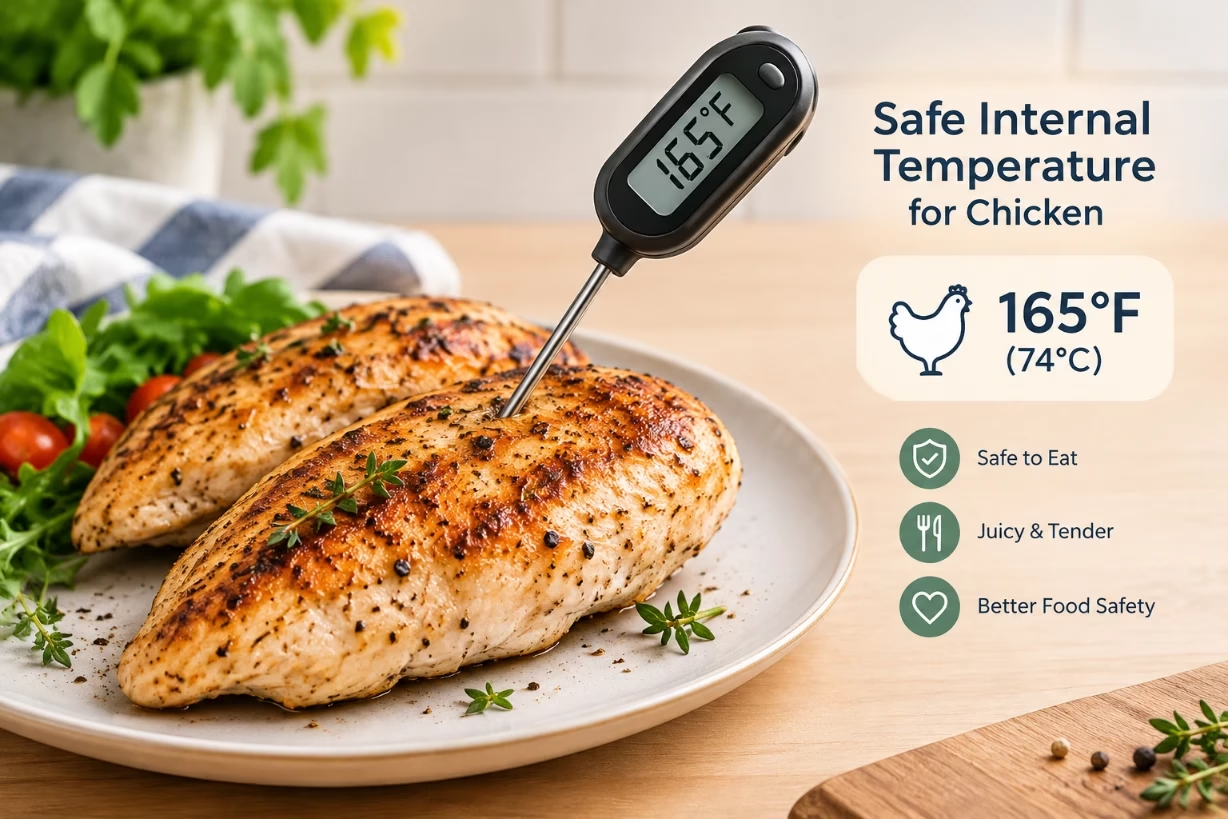
The safe chicken internal temp when done is 165°F measured in the thickest part of the meat with a food thermometer, with no pink at the bone and clear juices. This is the temperature that kills harmful bacteria and keeps your chicken juicy and safe.
When I first learned to cook, figuring out chicken internal temp when done felt like a guessing game. I would poke the meat, check the color, even cut it open to see if it looked done inside. Sometimes it was dry and stringy. Other times I worried I undercooked it. Once I started using a food thermometer and really learned the safe cooking temperature guide, everything changed. My chicken became safer, juicier, and honestly much less stressful to cook.
Why Chicken Internal Temp When Done Matters So Much
Chicken is not like steak. With steak, some people choose medium or even rare. With chicken, that is not safe. Raw or undercooked chicken can carry bacteria like salmonella and campylobacter. These can make you or your family very sick. That is why chicken internal temp when done is not just a cooking tip, it is a food safety rule.
Heat is what kills those germs. But here is the tricky part: the outside of the chicken can look golden and perfect while the inside is still not safe. Color, texture, and juices are not reliable by themselves. The only dependable way is a thermometer reading of the chicken internal temp when done.
The Official Safe Internal Temperature For Chicken
For most home cooks, the clear rule is simple: cook all chicken to an internal temperature of 165°F. That applies to:
- Whole chickens and whole turkeys
- Chicken breasts
- Chicken thighs, drumsticks, and wings
- Ground chicken and chicken burgers
- Chicken sausages and meatballs
When the thickest part of the chicken reaches 165°F and holds there briefly, you have hit a safe chicken internal temp when done. At that point, harmful bacteria are reduced to a safe level, and you can eat it confidently.
Why 165°F Is The Magic Number For Chicken
You might wonder, why 165°F and not 160°F or 180°F. Food safety experts chose 165°F because it balances two goals: killing bacteria while still keeping the meat moist enough to enjoy. At around 165°F, the proteins in chicken firm up, the juices mostly run clear, and those dangerous microbes die off very quickly.
Yes, you technically can make chicken safe at slightly lower temperatures if you hold it there longer, because time plus heat both affect bacteria. But that kind of precise time-temperature control is more advanced and usually used by chefs with tools like sous vide machines. For normal home cooking in an oven, pan, grill, or air fryer, 165°F is the safe and simple rule for chicken internal temp when done.
How To Use A Food Thermometer The Right Way
Owning a thermometer is one thing. Knowing how to use it is another. When I finally got serious about chicken internal temp when done, I had to fix a few habits. Here is what works best for me.
1. Pick The Right Type Of Thermometer
You do not need a fancy gadget, but a decent digital thermometer makes life easier. Instant-read digital thermometers are fast and simple. You push the probe into the meat, wait a couple of seconds, and read the number. For whole roasted chickens, some people also like an oven-safe leave-in thermometer that stays in the bird as it cooks, but an instant-read tool still works great.
2. Insert The Probe In The Right Spot
To measure chicken internal temp when done accurately, the tip of the thermometer needs to be in the thickest part of the meat, not touching bone or the bottom of the pan. Bones heat up faster and can give you a false higher reading.
Here is a quick guide:
- Whole chicken: insert into the thickest part of the thigh, between the drumstick and body, without hitting the bone.
- Chicken breasts: insert into the center of the thickest area, usually from the side.
- Thighs and drumsticks: go into the thickest part of the meat, away from bone.
- Ground chicken patties: insert into the side, reaching the center of the patty.
3. Check In More Than One Place
Chicken does not always cook evenly. The outer parts get hotter faster than the center, and some parts of your oven or grill may be hotter than others. When I check chicken internal temp when done, I like to test in two or three spots, especially for a whole bird or a large breast. If one area is still under 165°F, it all needs more time.
4. Avoid Constant Poking
It can be tempting to check every few minutes. But each time you poke the chicken, you let some juices escape. I usually wait until I am fairly sure it is almost done based on the cooking time, then check. If it is not there yet, I give it a few more minutes before checking again.
Safe Chicken Internal Temp By Cut And Cooking Method
Even though 165°F is the target, the way you reach that chicken internal temp when done depends on the cut and method. Some parts of the bird can handle a bit higher heat without drying out. Others need more gentle cooking.
Chicken Breasts
Chicken breasts are lean, which means they dry out fast. To keep them juicy while still hitting a safe internal temperature, I usually aim to pull them from the heat when the thermometer reads around 160°F, then let them rest. During the rest, carryover cooking raises the temperature to about 165°F. This trick helps keep breast meat moist while still honoring that chicken internal temp when done rule.
Chicken Thighs And Drumsticks
Dark meat has more fat and connective tissue. Many cooks, including me, prefer thighs and drumsticks cooked a bit hotter, often to 175 to 185°F in the thickest part. At that range the meat gets very tender, and the connective tissue softens. This is still safe, because anything above 165°F is past the minimum chicken internal temp when done.
Whole Roasted Chicken
For a whole chicken in the oven, the key is the thigh. When I roast a bird, I check the temperature in the thickest part of the thigh first. Once it hits 165°F or a bit higher, the breast is usually done too. If the breast is browning too fast before the thigh reaches a safe chicken internal temp when done, I sometimes tent the breast area loosely with foil to slow it down.
Ground Chicken
Ground chicken is a bit higher risk because bacteria that were only on the surface of whole pieces can get mixed throughout the meat when it is ground. That is why every part of a ground chicken patty or meatball needs to reach at least 165°F. There is no medium or pink center here. When I make chicken burgers, I always check the center of one patty to make sure the chicken internal temp when done is truly 165°F or above.
Air Fryer, Grill, And Stovetop
Many of us now use air fryers, grills, or quick stovetop methods. The same safe temperature rules apply, but the timing can change. Air fryers often cook faster because of the hot, moving air. Grills can create hot and cool zones. That is why I treat time guides only as rough helpers. The decision to stop cooking is based on the thermometer reading of chicken internal temp when done, not the clock.
Carryover Cooking And Resting Time
One detail that helped me stop overcooking chicken was learning about carryover cooking. When you take hot food off the heat, it keeps cooking for a short while because the surface is hotter than the center. Heat keeps moving inward, and the internal temperature can climb another 3 to 5 degrees or so.
So if you roast chicken breasts and they read 162°F, you can take them out of the oven and let them rest for 5 to 10 minutes. During that rest, the internal temp usually rises to or near 165°F, which counts as safe chicken internal temp when done. The rest also lets the juices settle back into the meat instead of running all over your cutting board when you slice it too soon.
Why You Cannot Trust Color, Juices, Or Texture Alone
Many people still rely on signs like color, clear juices, or how firm the chicken feels. I used to do that too, but those signs can fool you. Here are a few myths I see often.
Myth 1: If The Juices Run Clear, It Is Safe
Clear juices can be a hint, but not a guarantee. Sometimes undercooked chicken can still show clear juices, and sometimes fully cooked chicken still releases slightly pinkish juice, especially near bones. Only the thermometer reading of chicken internal temp when done can truly tell you if it is safe.
Myth 2: If There Is No Pink, It Is Done
Color is affected by age of the bird, cooking method, and even the minerals in your water if you brine it. Meat can look white and still be below 165°F inside. Or it can have a slight pink tinge but actually be fully safe if the internal temperature is high enough for long enough.
Myth 3: I Can Tell By Touch
Some cooks use the “press test,” feeling how firm the meat is. While experience can give you a rough guess, it is not reliable for safety. A slightly firm breast can still sit at 150°F, which is too low for quick killing of bacteria. A simple thermometer removes that guesswork from checking chicken internal temp when done.
Step By Step Guide: Cooking A Safe And Juicy Chicken Breast
To bring all this together, here is exactly how I usually cook a chicken breast in the oven while honoring safe chicken internal temp when done.
First, I start with even pieces. If the breast is very thick on one side and thin on the other, I pound it gently or butterfly it so it cooks more evenly. Then I season it with salt, pepper, and whatever spices I feel like that day. Sometimes I marinate it for extra flavor.
I preheat the oven to around 400°F. I place the breasts on a lightly oiled sheet pan or baking dish. Then I bake them for about 18 to 25 minutes, depending on thickness. Around the 18 minute mark, I insert my thermometer into the thickest part from the side and check the reading.
If it reads 155 to 160°F, I know I am very close. I usually give it a couple more minutes until the thickest part reaches around 160 to 162°F, then I pull the pan out. I let the chicken rest, loosely tented with foil, for 5 to 10 minutes. When I check again after the rest, the chicken internal temp when done usually lands at or near 165°F. The meat stays moist, and I feel calm about serving it to my family.
Common Mistakes That Lead To Dry Or Unsafe Chicken
Once you understand chicken internal temp when done, it gets easier to avoid the common traps that lead to dry or unsafe results. Here are a few I see over and over.
Cooking Straight From The Fridge Without Planning
Very cold chicken straight from the fridge can cook unevenly, with the outside racing past 165°F while the inside drags behind. I like to let chicken rest at room temperature for about 15 to 20 minutes before it goes in the pan or oven. Not long enough to risk safety, but enough to help more even cooking and clearer thermometer readings for chicken internal temp when done.
Using Too High Heat Only
Blasting chicken on very high heat the whole time can burn the outside and still leave the inside undercooked. For thick pieces, I often sear over medium high heat to get color, then finish in the oven at a moderate temperature until the internal temp reaches 165°F. That mix gives me good flavor and safe chicken internal temp when done.
Never Letting It Rest
Slicing right away lets the juices pour out, which makes the meat dry even if you nailed the chicken internal temp when done. A short rest keeps more of that moisture locked inside each piece.
How To Keep Track Of Food Safety In A Busy Kitchen
If your kitchen is like mine, you might have kids running around, music playing, maybe a pet hoping for scraps. In all that movement, it helps to build a simple routine so you do not forget about chicken internal temp when done.
My own routine is straightforward. I wash my hands before and after touching raw chicken. I use a dedicated cutting board for raw meat. I season and arrange the chicken, then set a timer based on experience with that recipe. When the timer rings, I do not assume it is done. That noise reminds me to grab the thermometer and actually check the internal temperature.
Over time, you start to learn how long your oven or grill usually needs for different cuts, but the thermometer stays the final judge of safe chicken internal temp when done. It becomes almost automatic, like buckling a seat belt before driving.
Frequently Asked Questions About Chicken Internal Temp And Safe Cooking
What is the minimum safe temperature for cooked chicken?
The minimum safe chicken internal temp when done is 165°F in the thickest part of the meat. Use a digital food thermometer to check, keeping the probe away from bone and pan, to be sure harmful bacteria are destroyed.
Can I eat chicken at 160°F if it looks fully cooked?
Chicken at 160°F might look done but still be risky if it does not stay at that temperature long enough. For most home kitchens, I follow the simple rule that chicken internal temp when done needs to reach 165°F for quick, reliable safety.
How long should chicken rest after reaching 165°F?
After chicken hits a safe internal temperature, I usually let it rest for 5 to 10 minutes. This lets juices settle and lets carryover heat even out the chicken internal temp when done, so the meat ends up both safe and tender.
Do air fryers change the safe internal temperature for chicken?
Air fryers cook faster but the safety rule stays the same. No matter the appliance, chicken internal temp when done must reach 165°F in the thickest part. The main change is cooking time, not the final target temperature.
Is it safe to reheat cooked chicken more than once?
I try to reheat cooked chicken only once. When reheating, I still aim for chicken internal temp when done of 165°F again. Repeated cooling and reheating can increase food safety risks and dry out the meat even more.
Why is ground chicken considered higher risk than whole pieces?
Ground chicken mixes surface bacteria throughout the meat, so every bit must reach the safe 165°F mark. That is why chicken internal temp when done is especially important with burgers, meatballs, and patties made from ground poultry.
Can I rely on a color change instead of a thermometer?
Color alone can mislead you. Chicken sometimes turns white before it reaches a safe internal temp. A digital thermometer is the only reliable way to confirm chicken internal temp when done, giving you both safety and peace of mind.